Start with the exact line
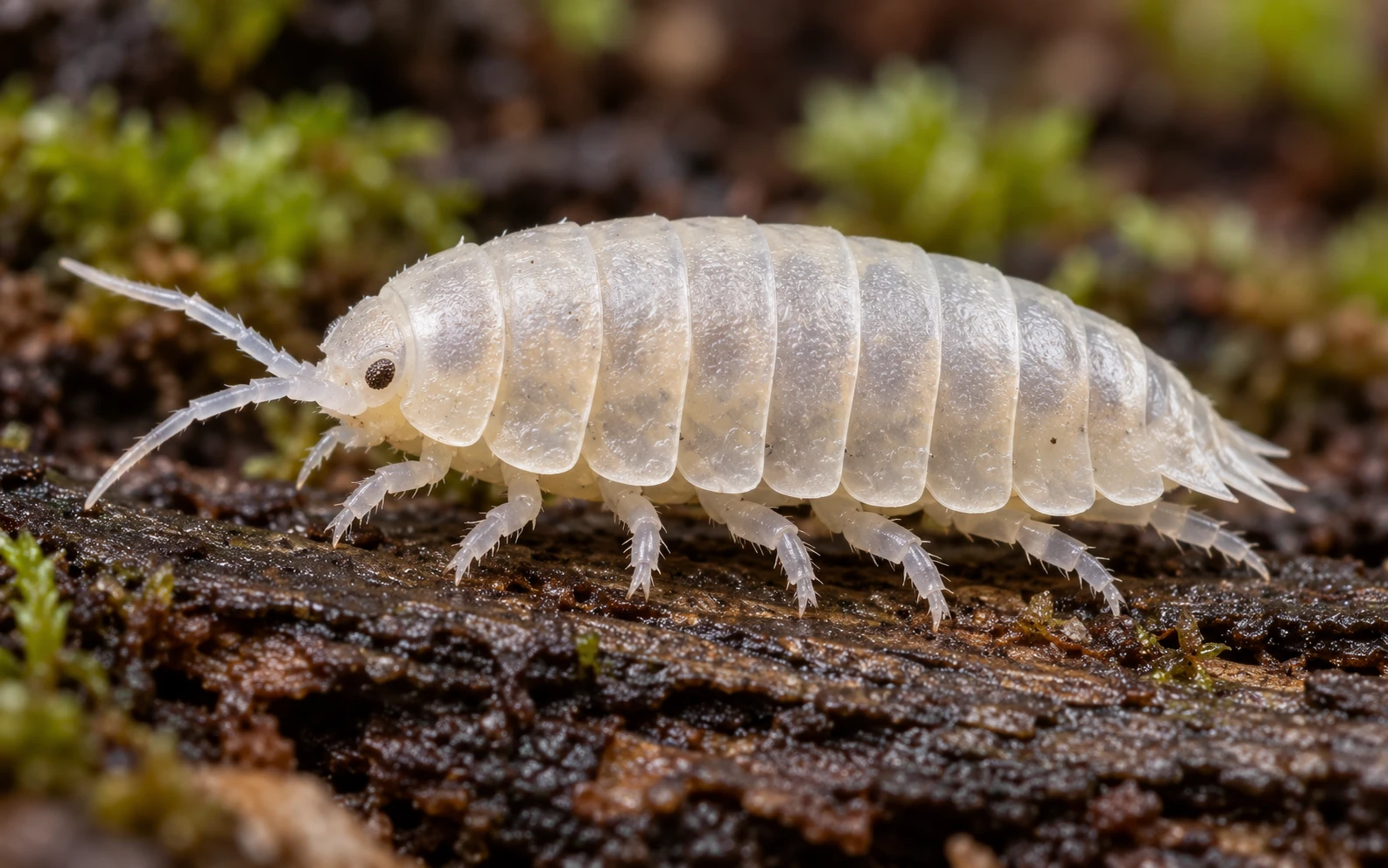
Record genus and species, captive-bred line, source, approximate age and the keeper’s evidence. Armadillidium, Porcellio, Porcellionides and Cubaris should not be treated as one care recipe. The cited overview gives genus-level starting points and says individual needs vary.
Substrate and moisture gradient
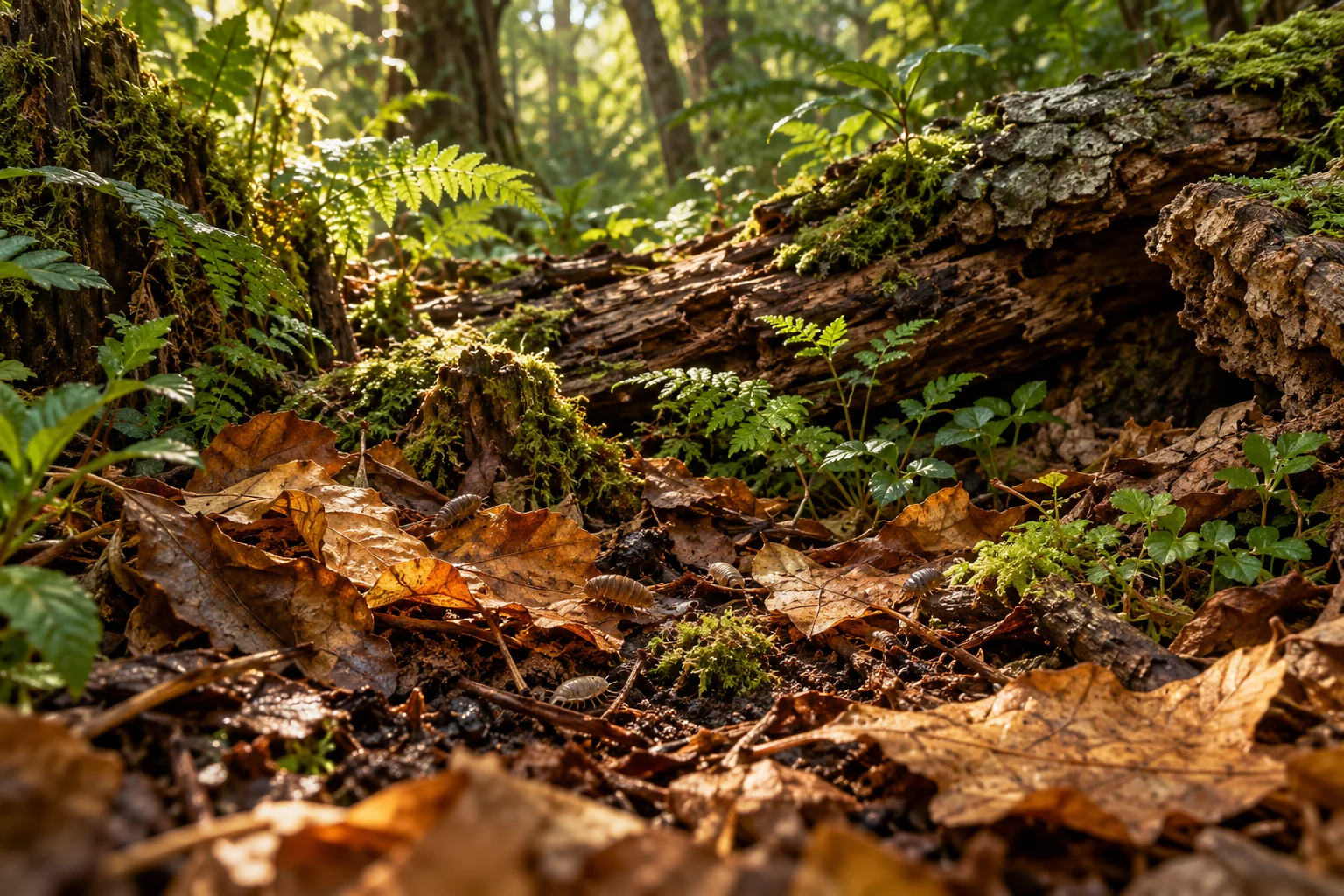
Use deep, chemical-free, moisture-holding substrate with decaying leaf litter, bark and a calcium source appropriate to the species. Maintain a reliably moist refuge at one side while allowing a drier area and airflow; do not keep the whole bin saturated.
Sources: Isopod.com — genus-level isopod care overview · EAZA — invertebrate live food management guideline
Food and colony care
Leaf litter is the foundation. Offer small supplementary portions, remove moulding or spoiled food and provide safe calcium. Check colony behaviour, moulting, young and dead animals without repeatedly dismantling the habitat.
Ventilation and troubleshooting
Stagnant, waterlogged substrate, sudden drying, mites, overheating and contaminated leaves can cause losses. Improve drainage or airflow gradually, remove suspect material and seek an experienced invertebrate keeper when a colony declines. There is no universal humidity percentage here.
Bioactive limits
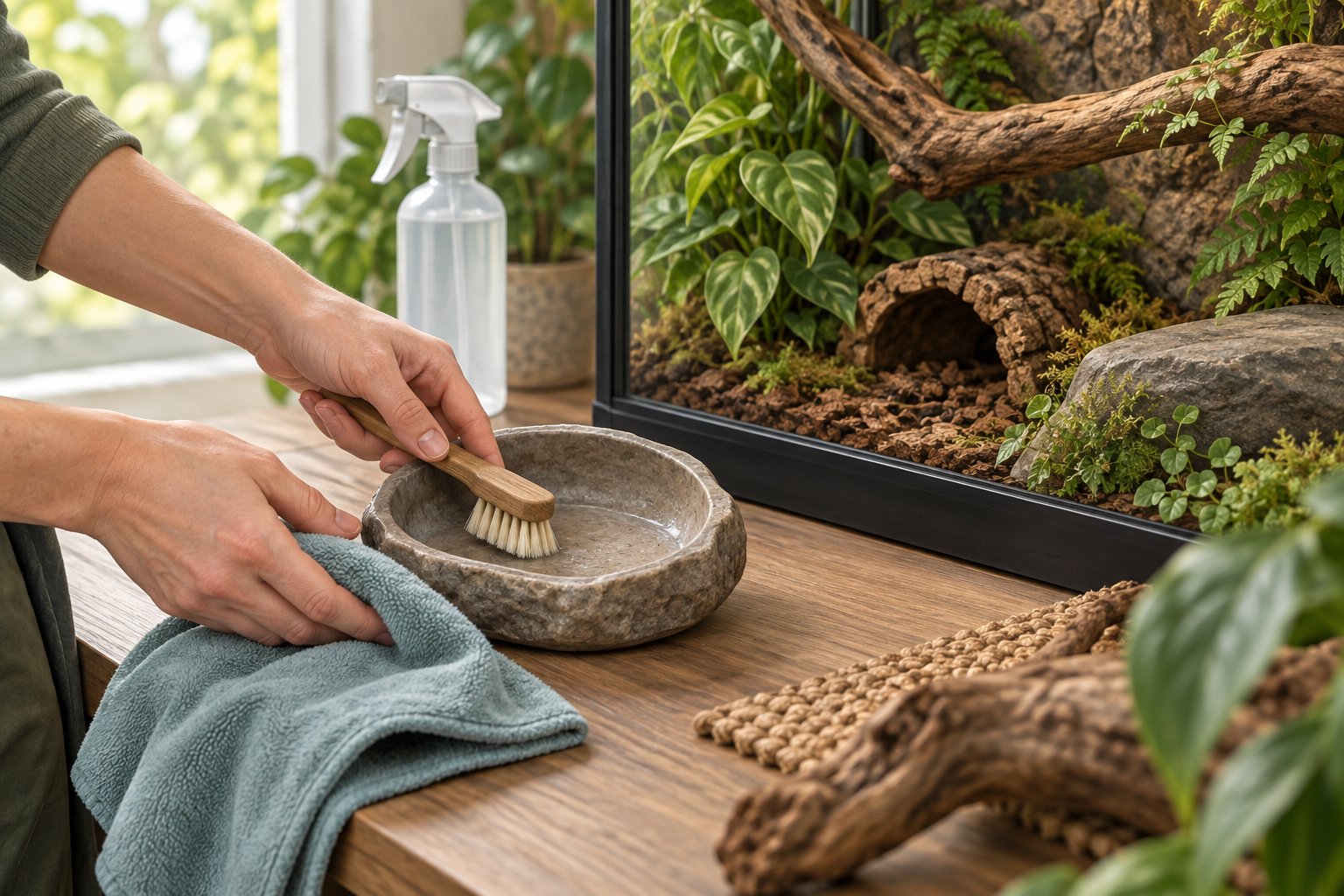
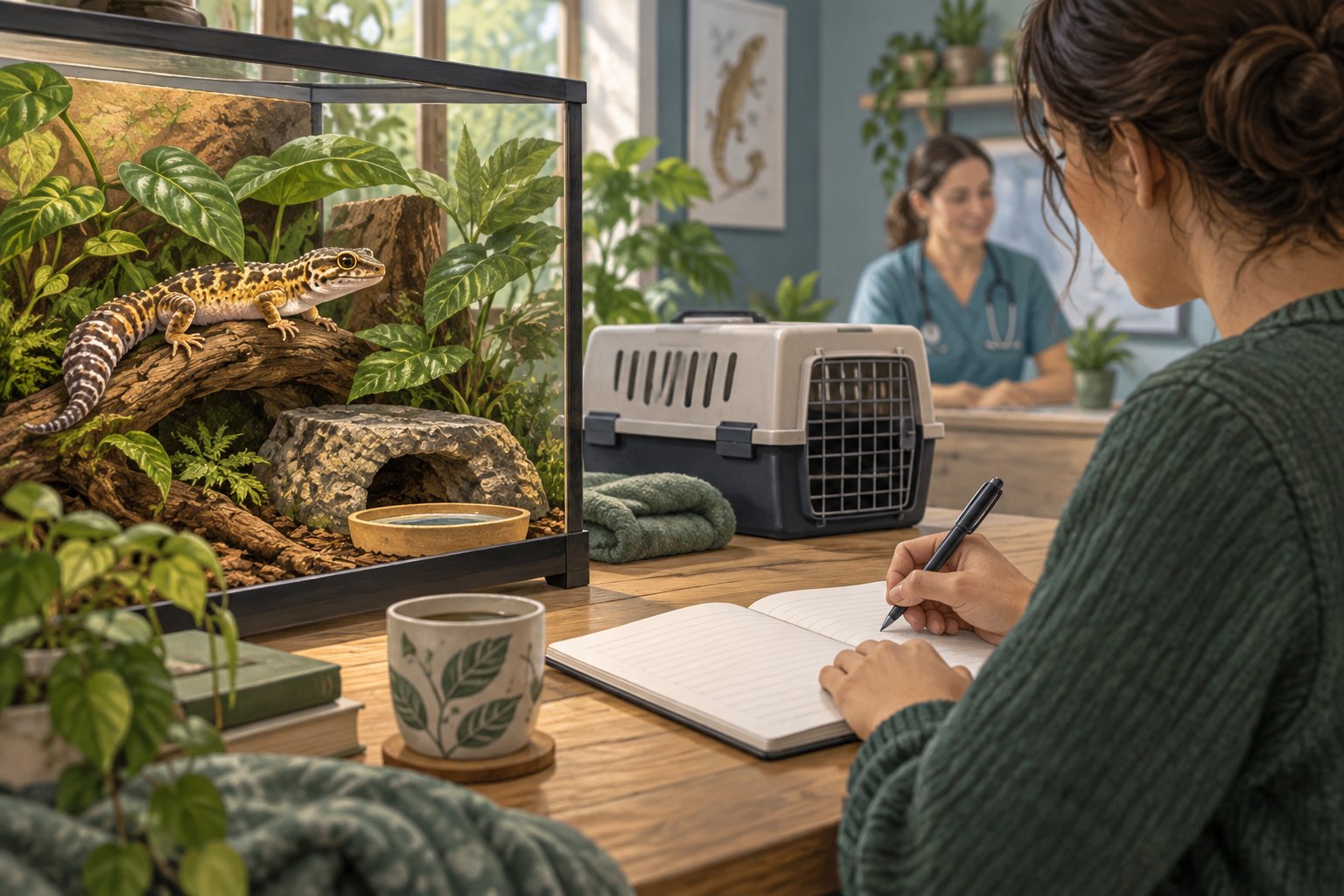
Isopods and springtails can support a planted enclosure, but they do not replace spot-cleaning, quarantine, safe substrate or species-specific animal care. Never add a clean-up crew without checking that the resident animal will not eat or be harmed by it.
Sources: Isopod.com — genus-level isopod care overview · GOV.UK — 2026 Code of Practice: care and accommodation
Species guides
Read the current species guides for care needs, source disagreements and limitations.
Sources & limitations
- Isopod.com — genus-level isopod care overview
- EAZA — invertebrate live food management guideline
- GOV.UK — 2026 Code of Practice: care and accommodation
This overview covers shared needs only. Follow the current species guide and assess your animal’s life stage and enclosure conditions.