Daily checks
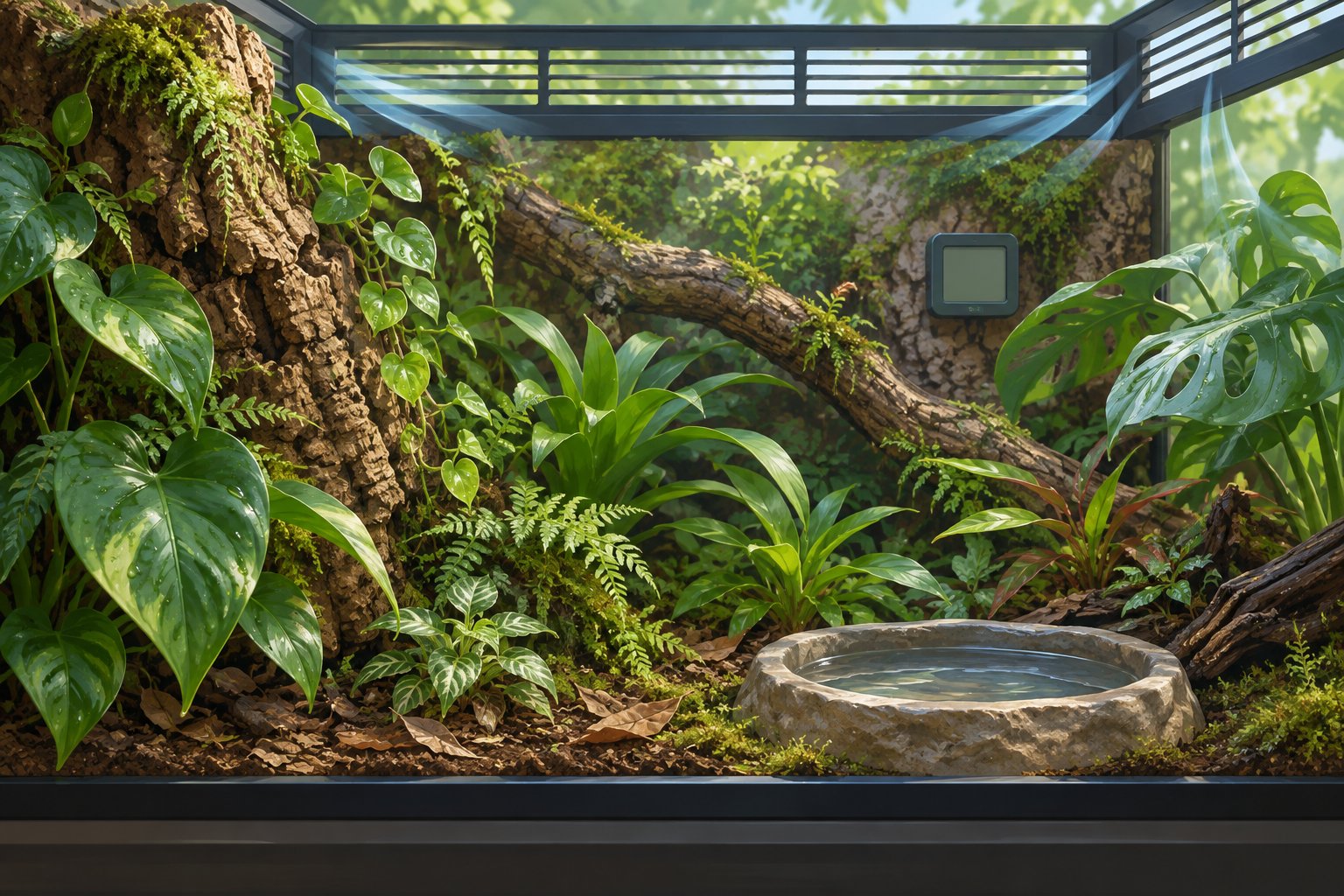
Observe the animal before disturbing the enclosure. Check the measured warm and cool areas, humidity where relevant, fresh water, secure doors and visible injuries. Remove faeces, shed skin and spoiled food promptly. Record readings instead of relying on memory.
Sources: GOV.UK — 2026 Code of Practice: care and accommodation · RSPCA — reptiles and water
Cleaning without erasing enrichment
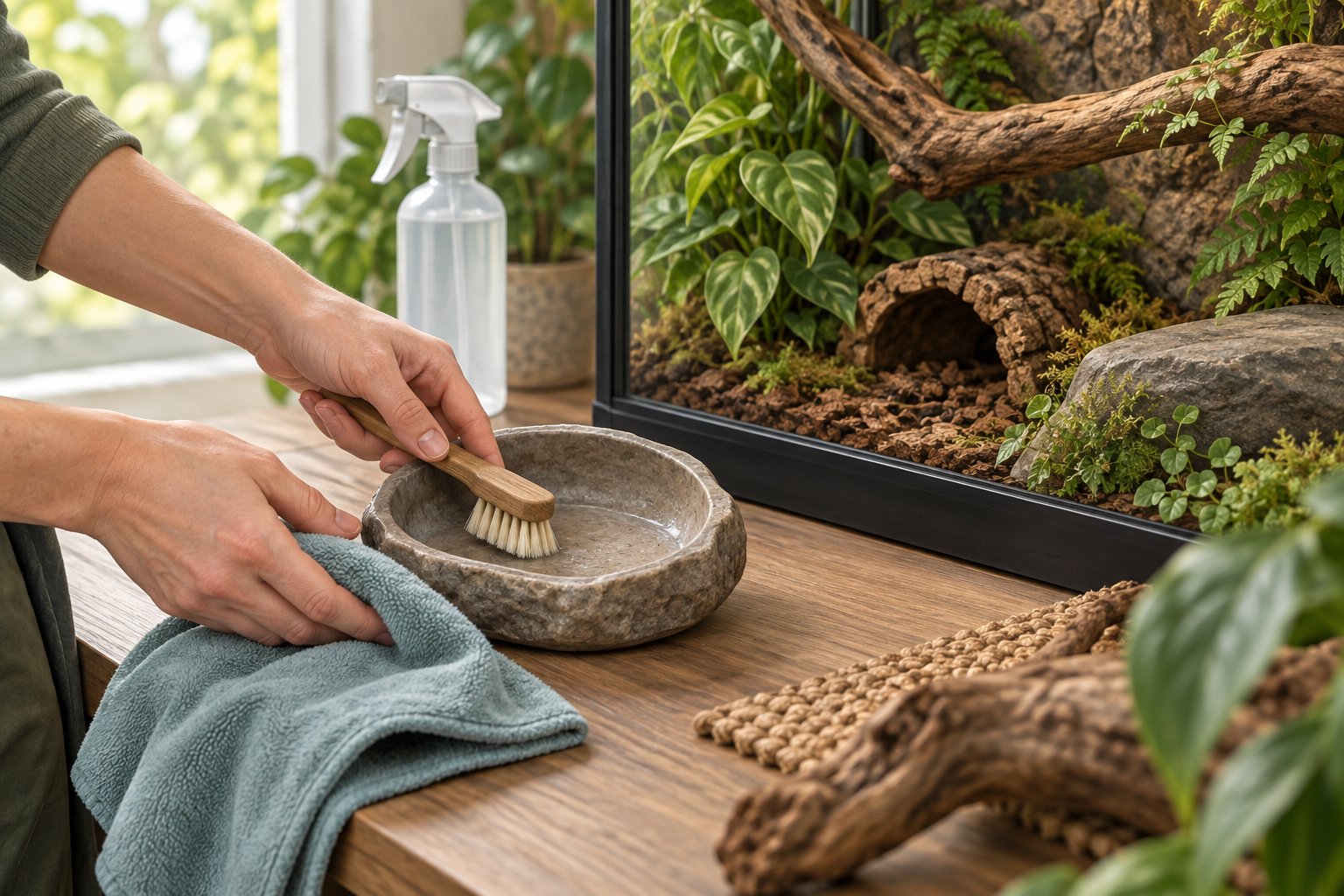
Spot-clean with a species-appropriate, reptile-safe product and follow its label. Avoid aggressive detergents and return hides, branches and other enrichment to familiar positions after cleaning. Replace wet or contaminated substrate and keep drainage working.
Sources: GOV.UK — 2026 Code of Practice: care and accommodation
Weekly and periodic tasks
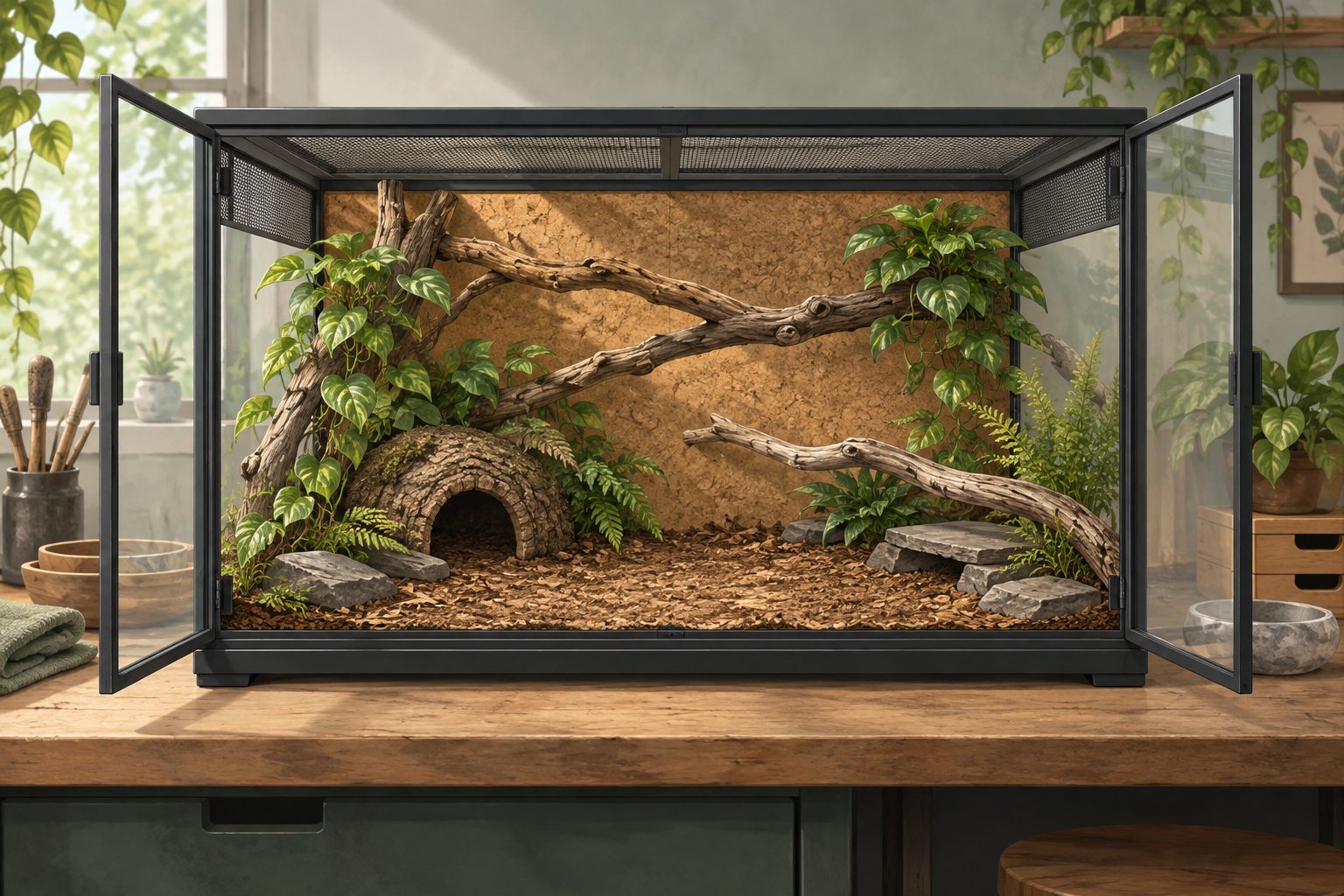
Wash and refill water containers, inspect seals, guards, cables, probes, lamp mounts and ventilation. Review UVB lamp age and manufacturer replacement guidance. Deep-clean on a schedule suited to the species, substrate and enclosure, while preserving a clean, stable environment.
Sources: GOV.UK — 2026 Code of Practice: care and accommodation · RSPCA — reptiles and water
Quarantine and records
Keep new or unwell animals separate from established animals and use dedicated tools where possible. Record weights, feeding, faeces, sheds, treatments and enclosure readings. Changes in appetite or behaviour are useful evidence for an exotics veterinarian.
Sources: GOV.UK — 2026 Code of Practice: care and accommodation · Merck Veterinary Manual — disorders and diseases of reptiles
Sources & limitations
- GOV.UK — 2026 Code of Practice: care and accommodation
- RSPCA — reptiles and water
- Merck Veterinary Manual — disorders and diseases of reptiles
Source dates, product evidence and individual-animal limitations still apply.