Choose the animal first
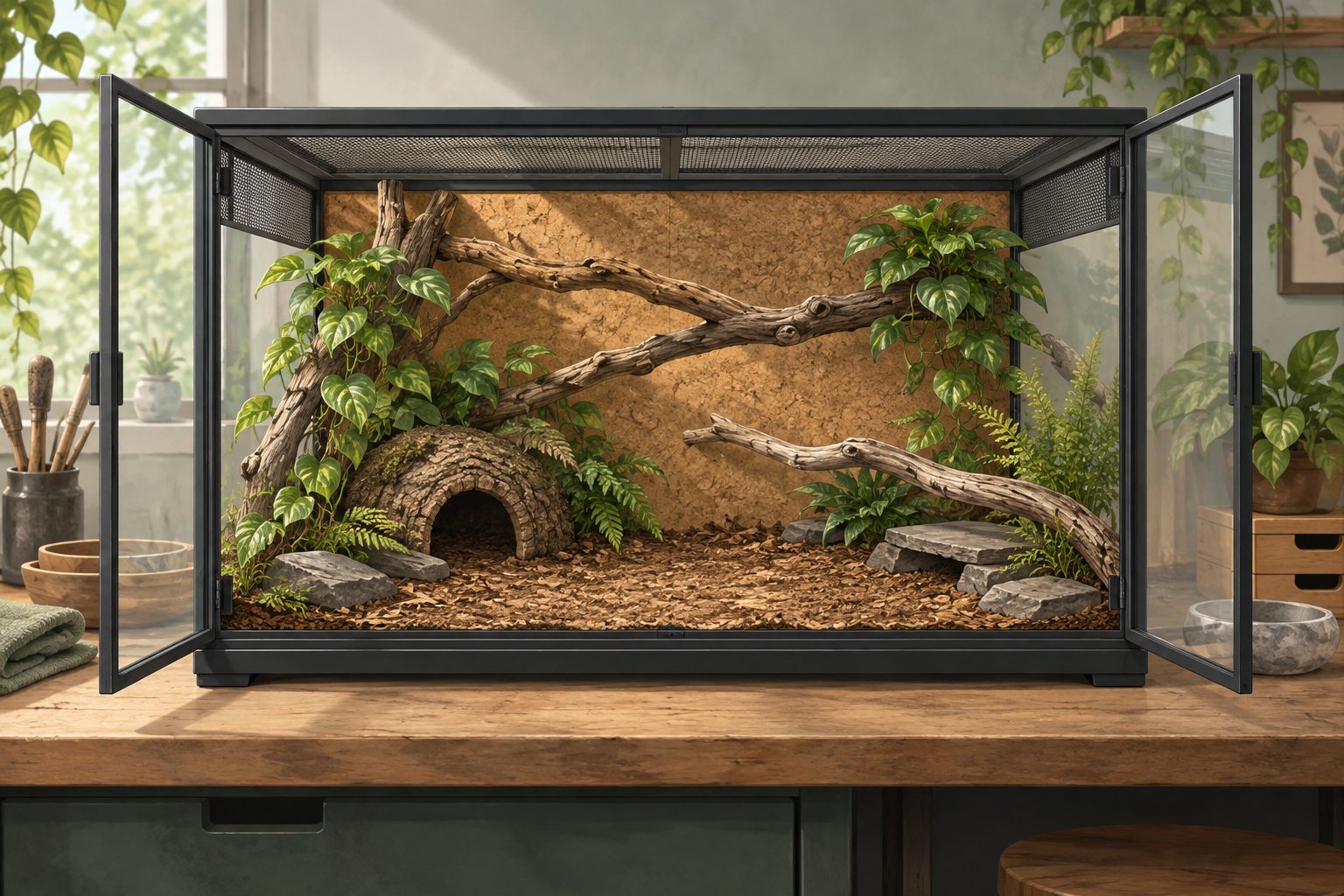
A substrate that supports an isopod colony or a planted tropical enclosure may be unsafe or unsuitable for a reptile, snake or invertebrate with different needs. Identify the exact species, life stage and feeding practice first.
Sources: RSPCA — bearded dragon care · RSPCA — crested gecko care · Isopod.com — genus-level isopod care overview
Build a moisture gradient
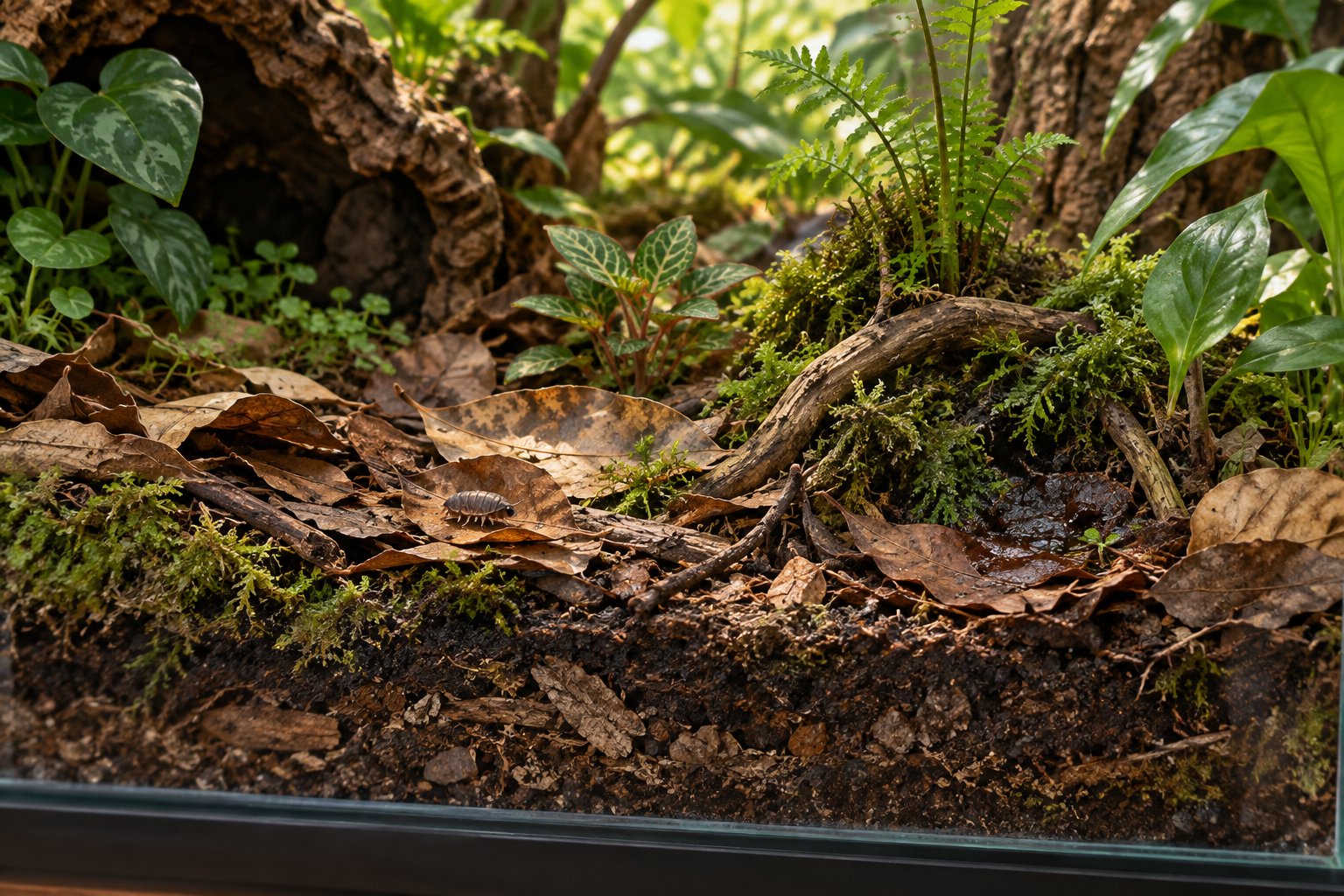
Use appropriate substrate depth and a reliably moist refuge only where the species needs it. Allow a drier area and airflow; waterlogged or stagnant substrate is not evidence of a healthy bioactive system.
Sources: Isopod.com — genus-level isopod care overview · RSPCA — crested gecko care · RSPCA — corn snake care
Add clean-up organisms carefully
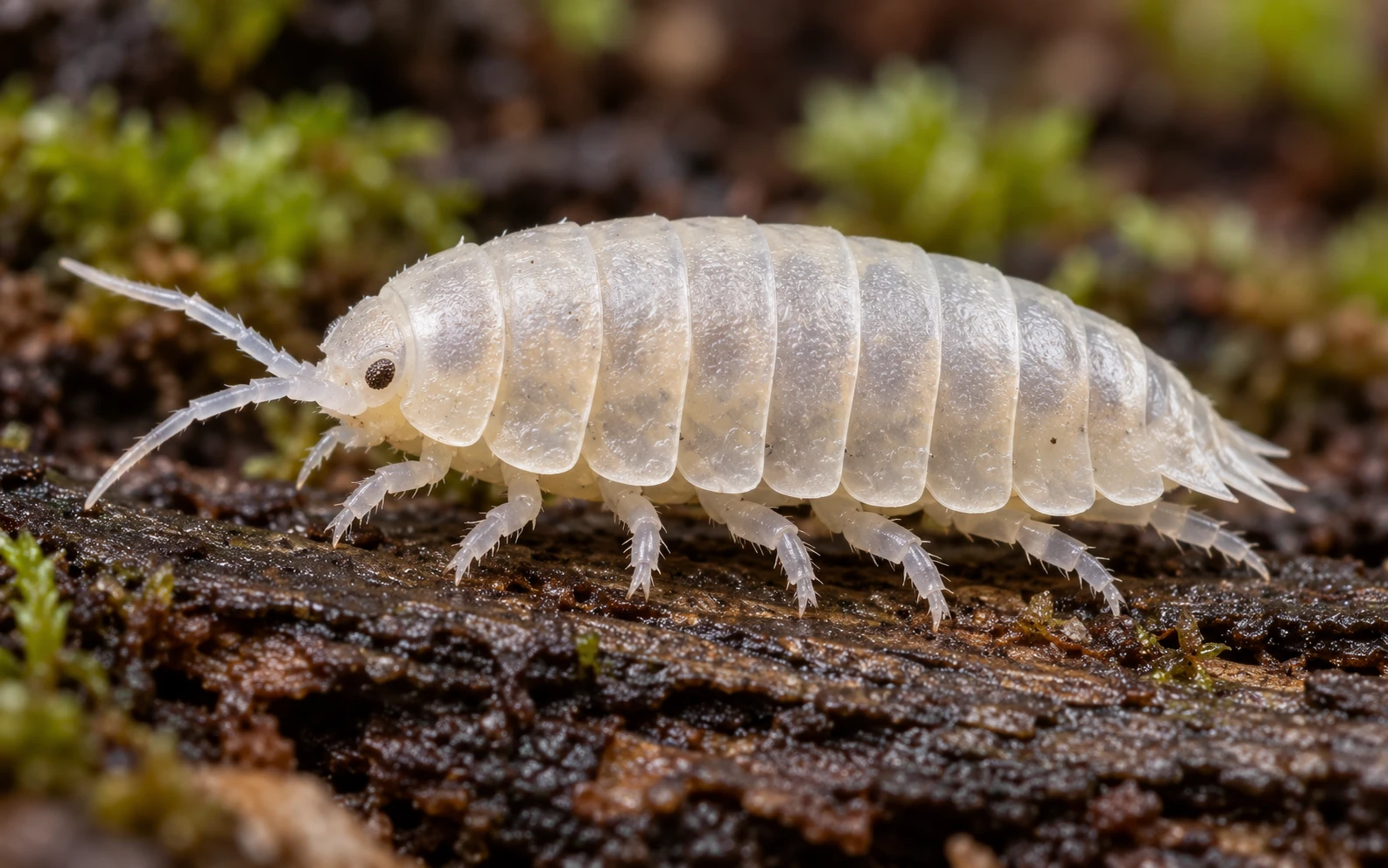
Isopods and springtails may support some systems, but they do not replace quarantine, spot-cleaning, drainage checks or removal of contaminated material. Never add a clean-up crew without checking that it will not be eaten or harmed.
Sources: Isopod.com — genus-level isopod care overview · GOV.UK — 2026 Code of Practice: care and accommodation
Review the whole enclosure
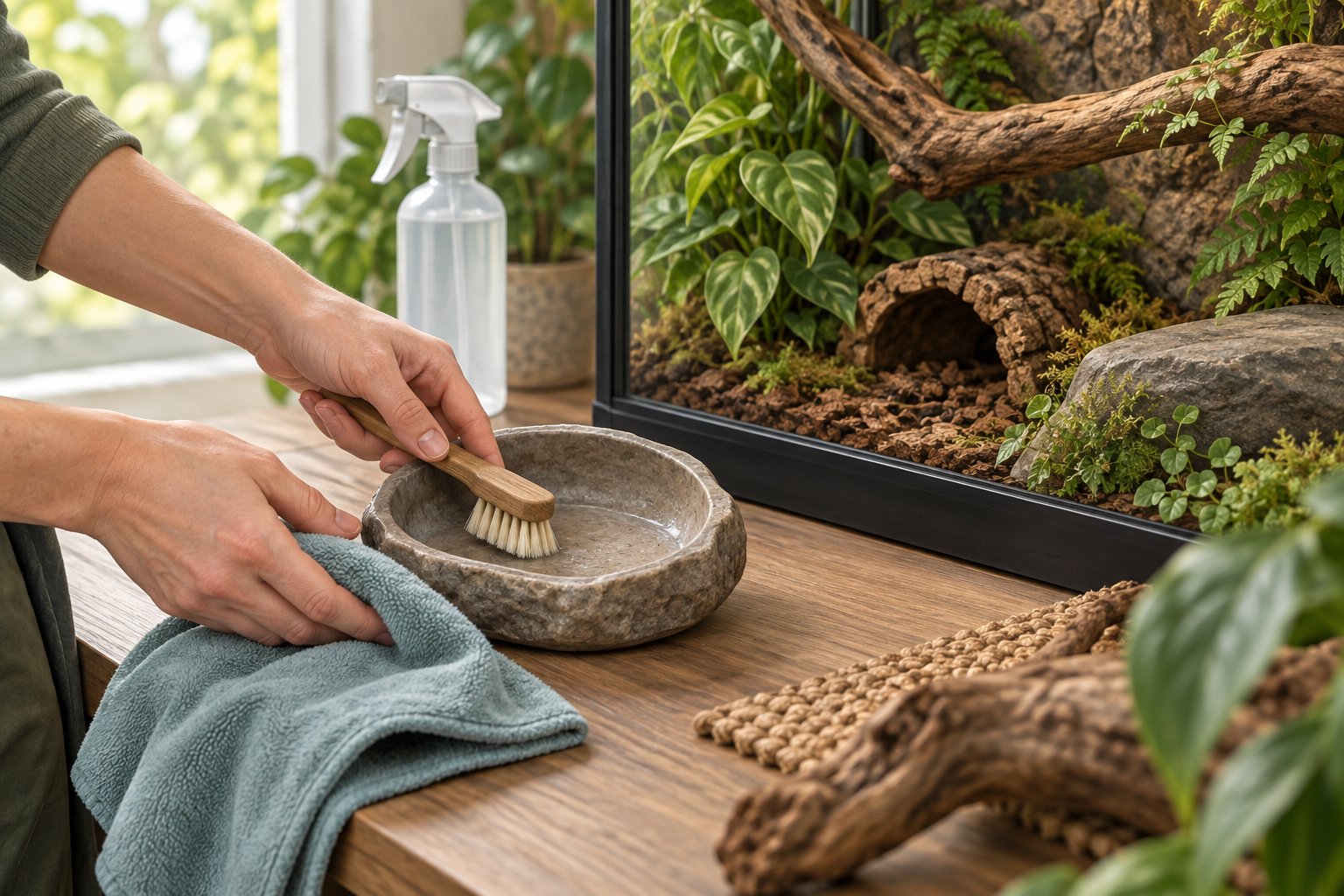
Check plant safety, mould, odour, waste, humidity at the animal’s level and whether the animal can escape or ingest loose material. Specialist review is needed for individual health, substrate choice and any naturalistic setup.
Sources: RSPCA — bearded dragon care · Isopod.com — genus-level isopod care overview · GOV.UK — 2026 Code of Practice: care and accommodation
Sources & limitations
- RSPCA — bearded dragon care
- RSPCA — crested gecko care
- Isopod.com — genus-level isopod care overview
- RSPCA — corn snake care
- GOV.UK — 2026 Code of Practice: care and accommodation
Source dates, product evidence and individual-animal limitations still apply.