Lifespan & company
Tarantulas can be a decade-plus commitment. Longevity differs substantially with species and sex; the older charity guide is not a lifespan table for individual species. Keep animals separately.
Sources: The Pet Charity, with the British Tarantula Society — tarantulas (2014)
Housing
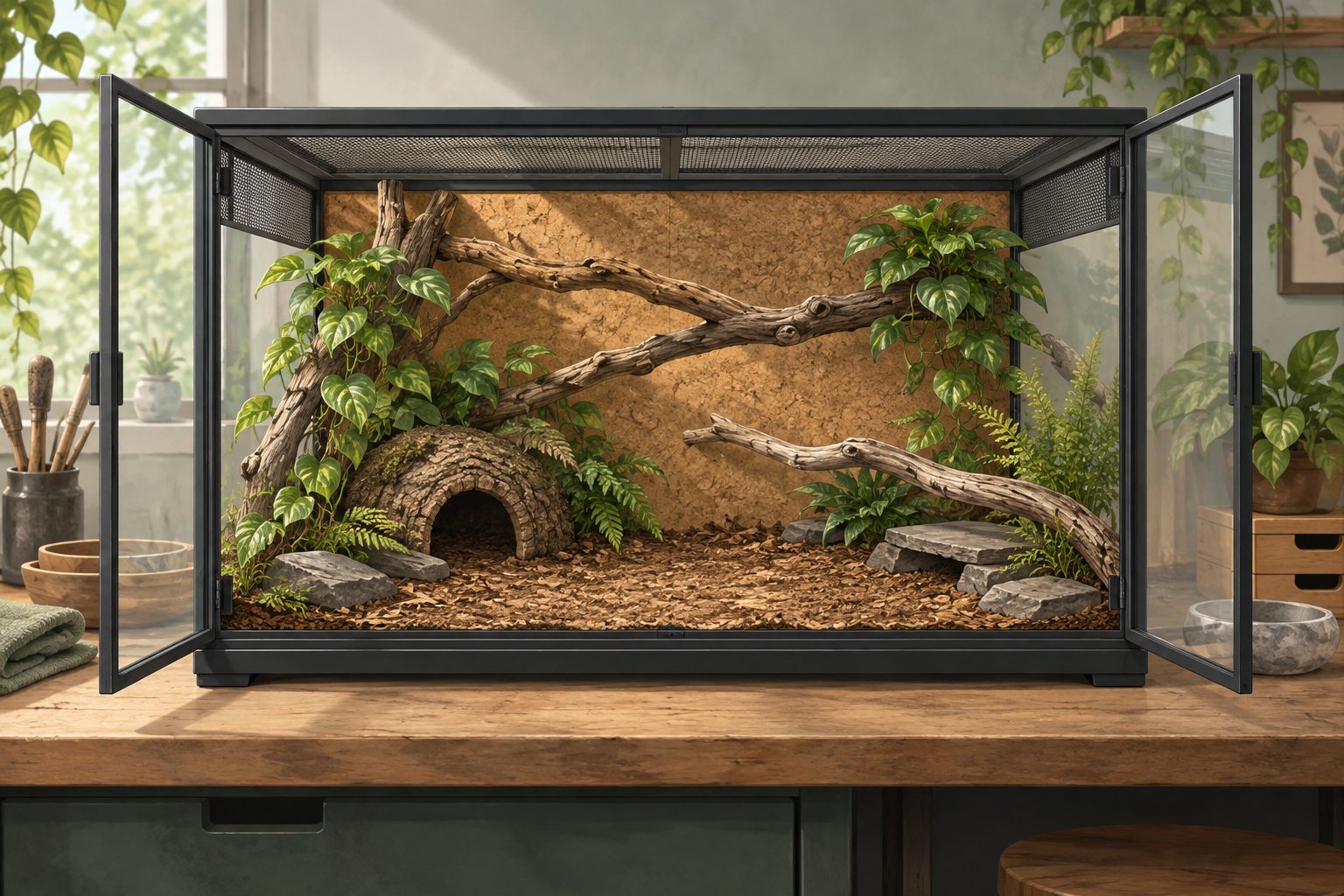
Establish whether your identified species lives on the ground, burrows or climbs before choosing the enclosure. Provide a secure retreat and appropriate substrate. A tall display tank is not a universal recommendation.
Sources: The Pet Charity, with the British Tarantula Society — tarantulas (2014)
Food & moulting
Offer suitable live insects and clean shallow drinking water. Remove uneaten prey, especially around a moult. A fasting spider is not automatically starving; seek expert help if condition deteriorates.
Sources: The Pet Charity, with the British Tarantula Society — tarantulas (2014)
Handling & evidence limits
Avoid handling: falls can be fatal and defensive hairs or bites can harm the keeper. Our source was produced in 2014 with British Tarantula Society assistance. Verify current species-specific conditions before setting temperature or moisture targets.
Sources: The Pet Charity, with the British Tarantula Society — tarantulas (2014)
Species guides
Read the current species guides for care needs, source disagreements and limitations.
Sources & limitations
This overview covers shared needs only. Follow the current species guide and assess your animal’s life stage and enclosure conditions.