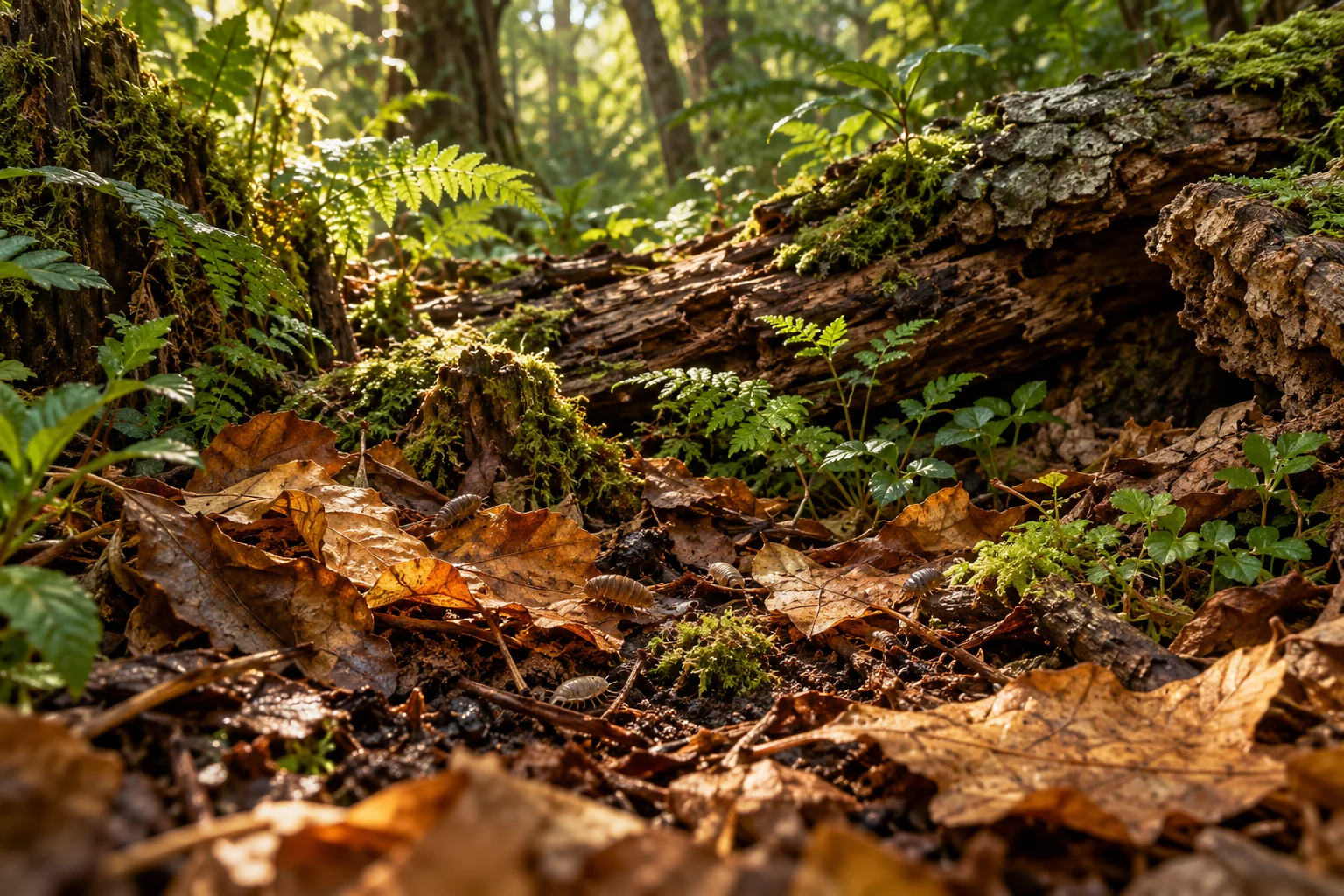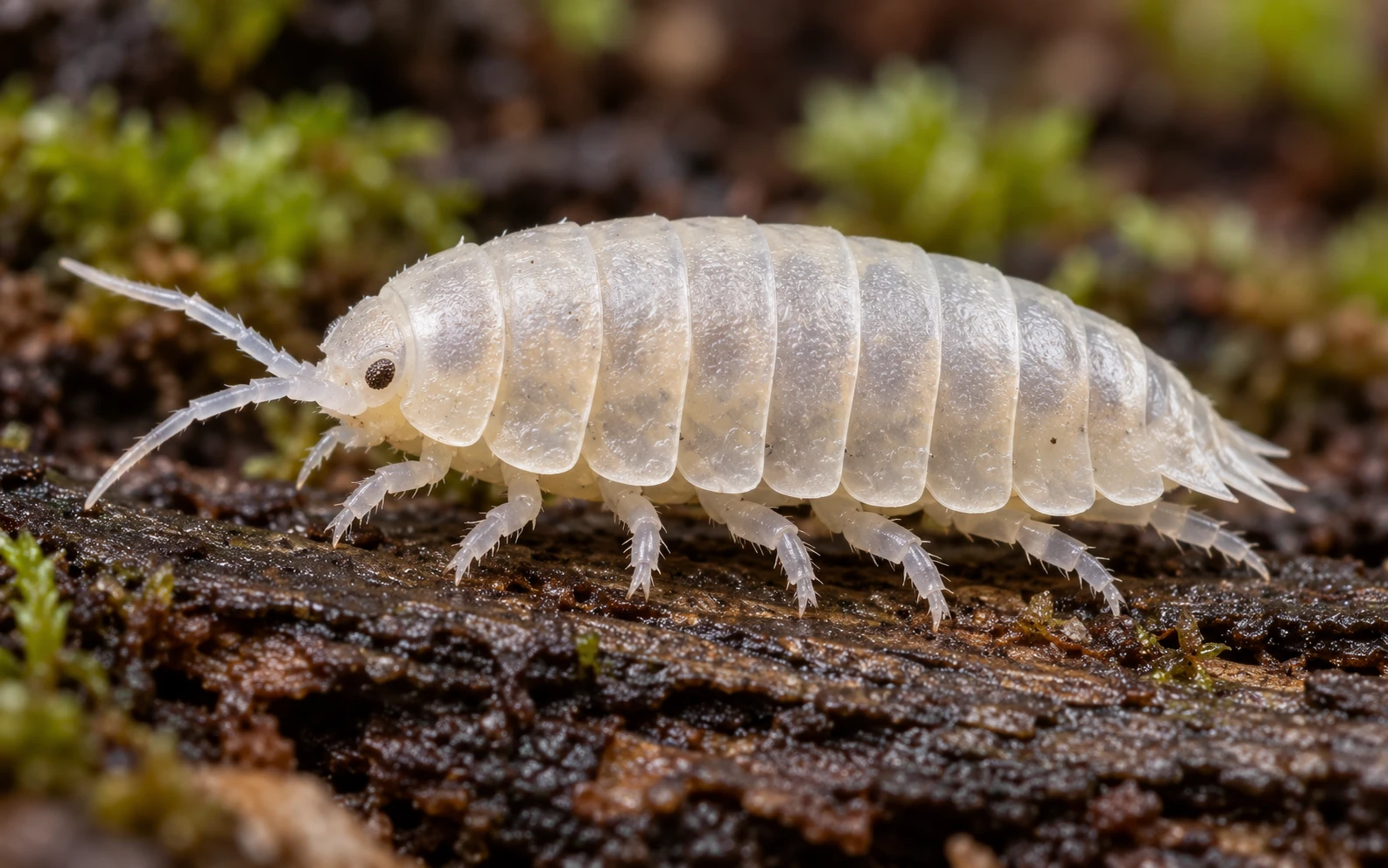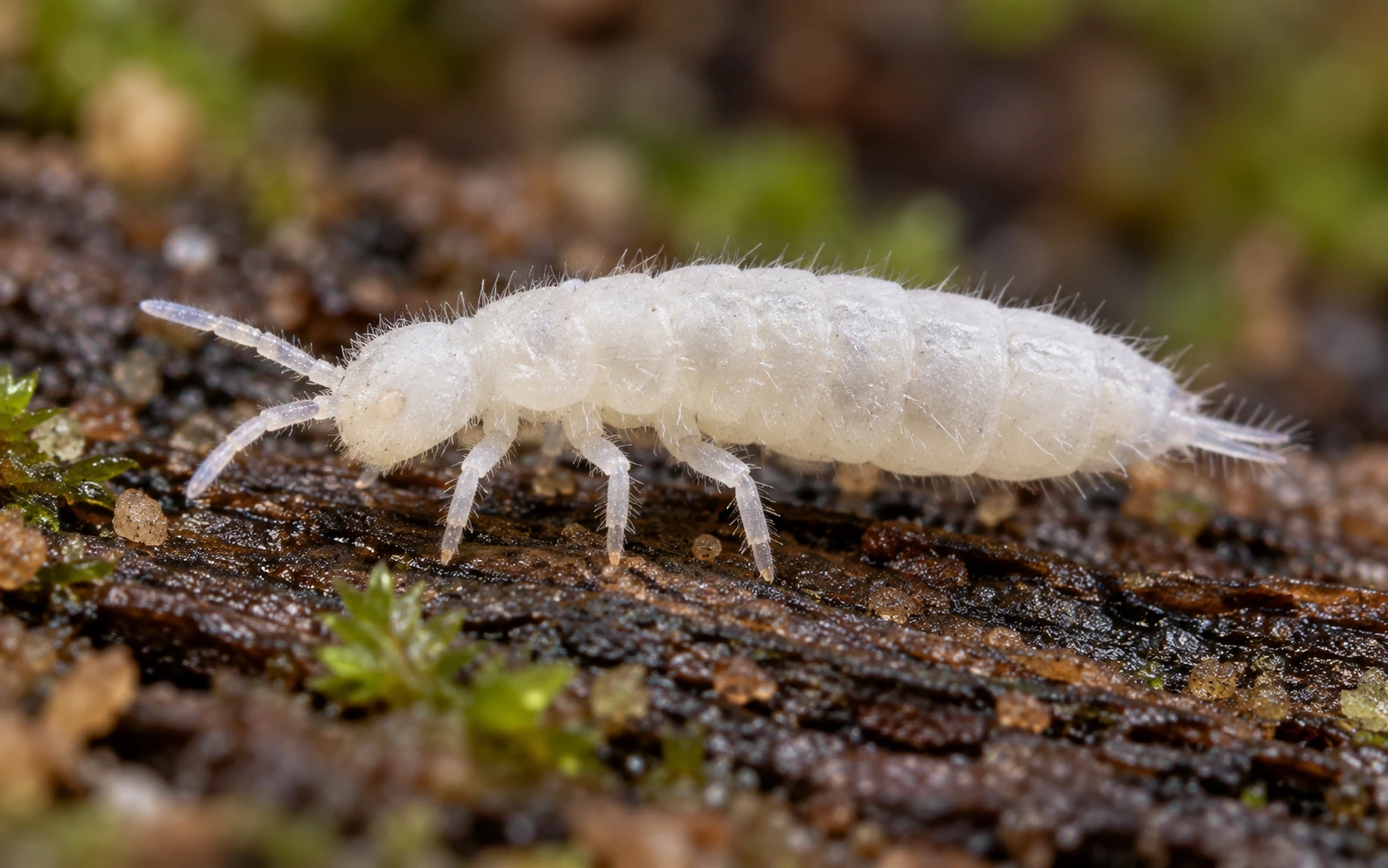
What they eat
Extension guidance describes springtails as moisture-associated decomposers that feed on fungi and organic material. Captive cultures are commonly maintained on a damp medium with tiny, controlled food amounts; remove contamination rather than repeatedly adding food.
Sources: Penn State Extension — springtails
Starting a culture
Use a clean, ventilated container, a moisture-holding medium and a safe transfer method. Keep cultures labelled with source and date. Avoid pesticide-contaminated leaves, cleaning chemicals and cross-contamination between animal enclosures.
Sources: Penn State Extension — springtails · GOV.UK — 2026 Code of Practice: care and accommodation
Troubleshooting
A culture that dries out may crash; a foul, saturated culture may be contaminated. Adjust moisture and food gradually, keep a backup culture and do not release captive stock outdoors.
Sources: Penn State Extension — springtails
Bioactive role
Springtails may help process mould and waste, but they do not make an enclosure self-cleaning. Continue species-appropriate spot cleaning, drainage checks and quarantine.
Sources: Penn State Extension — springtails · GOV.UK — 2026 Code of Practice: care and accommodation
Sources & limitations
Source dates, product evidence and individual-animal limitations still apply.