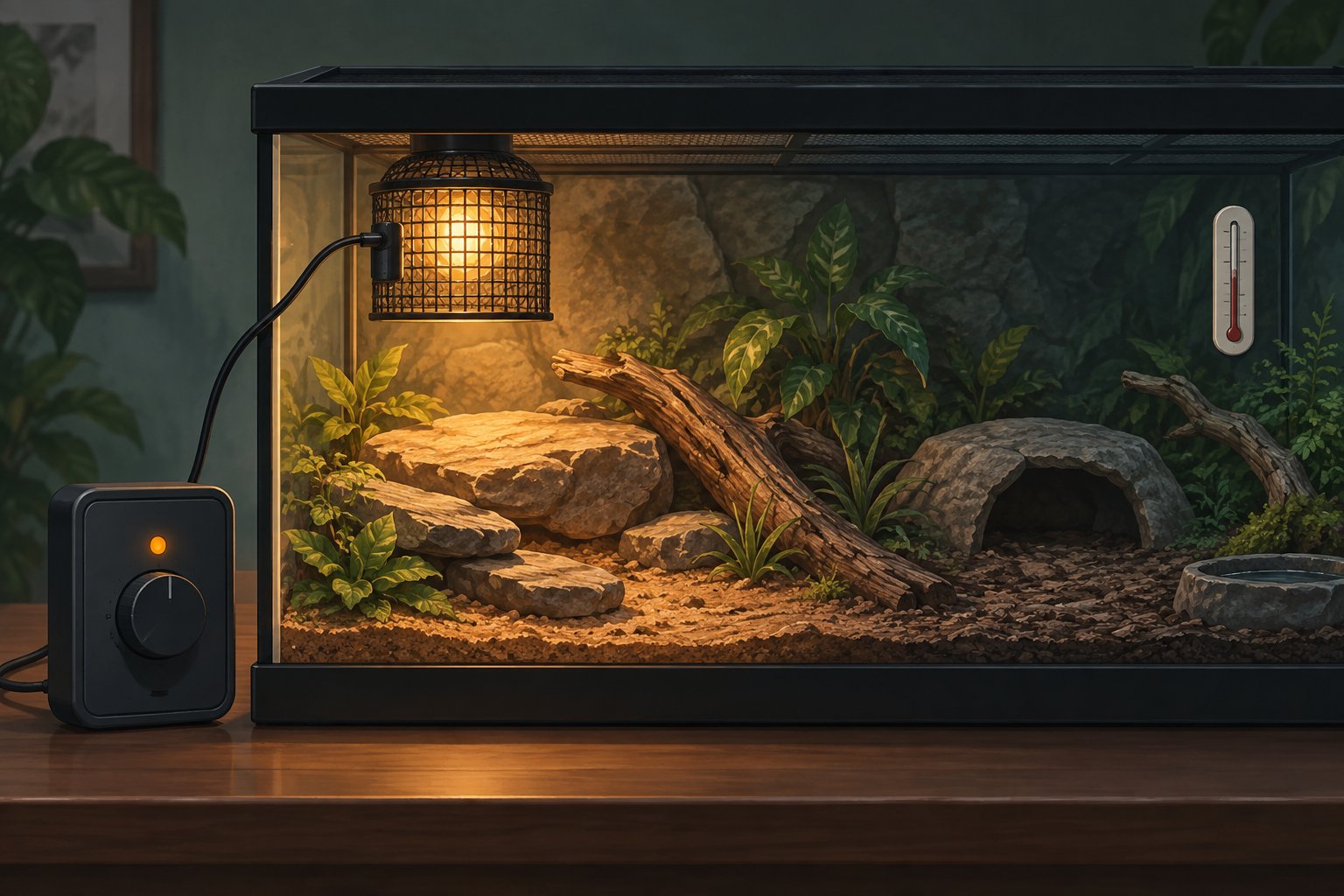
Separate control from measurement
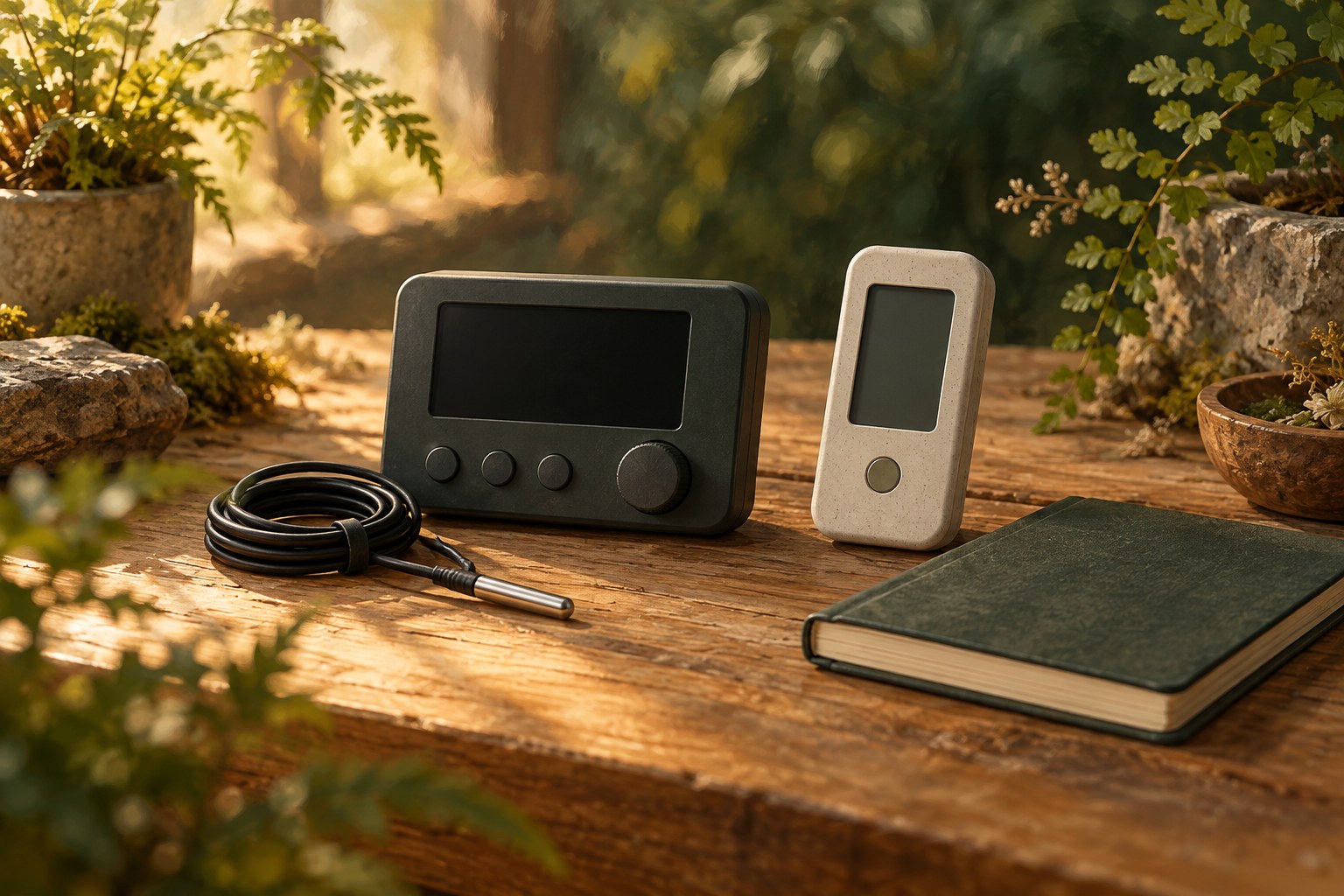
Use a compatible thermostat for the heater and independent thermometers to check the warm and cool areas. Do not use the controller display as the only evidence of the animal’s environment.
Sources: RSPCA — leopard gecko care · RSPCA — bearded dragon care · RSPCA — corn snake care
Match the control method
A dimming thermostat, pulse controller and on/off controller are different electrical and thermal choices. Match the controller to the heater, holder, guard, mains rating and manufacturer instructions instead of choosing by wattage alone.
Sources: RSPCA — bearded dragon care · RSPCA — royal python care
Place and secure the probe
The probe position changes what the thermostat controls. Secure it where the care plan requires, keep it protected from digging or chewing and cross-check the resulting temperatures at animal level.
Sources: RSPCA — leopard gecko care · RSPCA — bearded dragon care
Commission before introduction
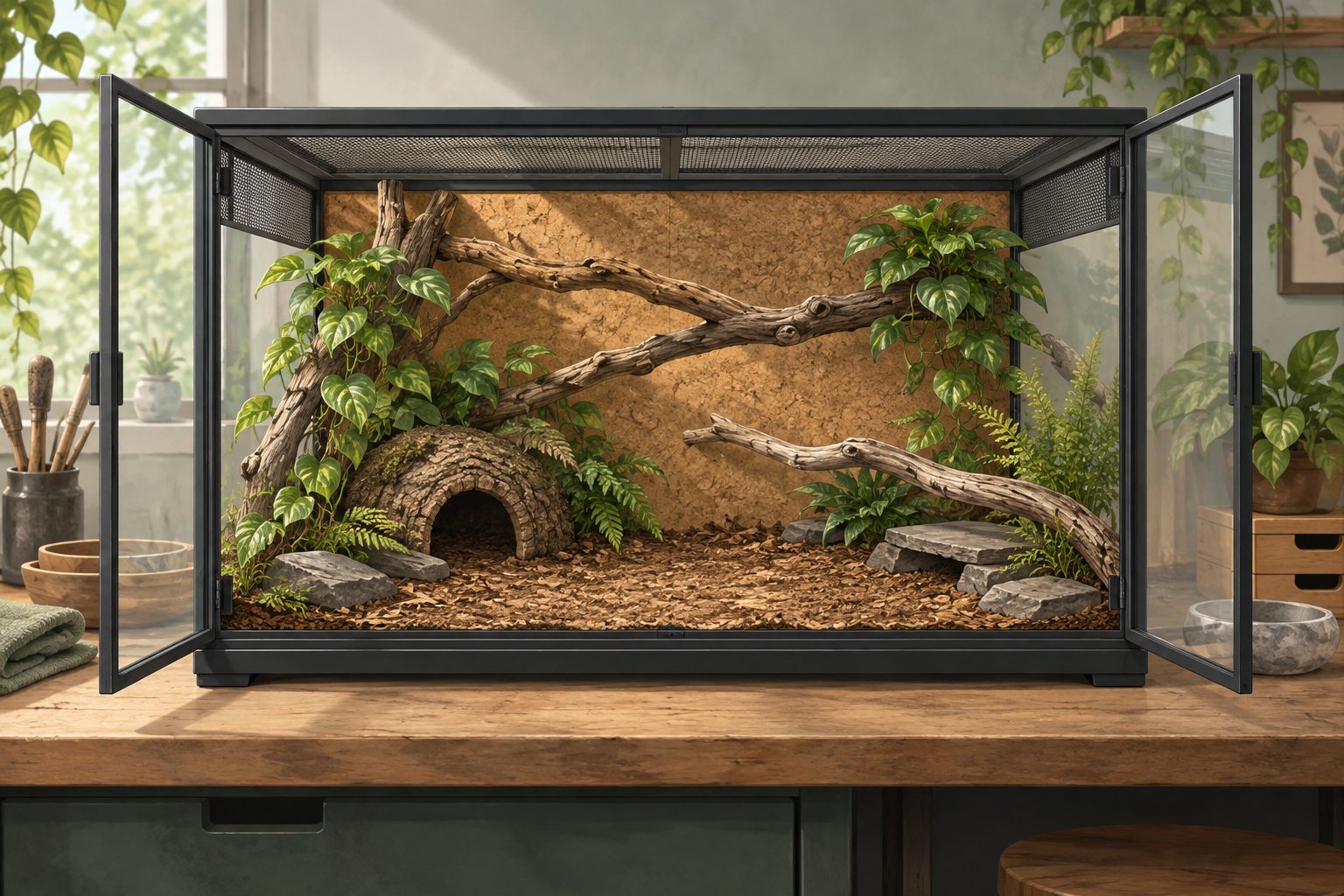
Run the complete enclosure through day and night cycles, log readings and check for overheating, cold retreats, failed guards or unsafe cable routes. A thermostat listing is not a compatibility certificate.
Sources: RSPCA — corn snake care · RSPCA — royal python care
Sources & limitations
- RSPCA — leopard gecko care
- RSPCA — bearded dragon care
- RSPCA — corn snake care
- RSPCA — royal python care
Source dates, product evidence and individual-animal limitations still apply.