Lifespan & diet
AES describes roughly 12–18 months for mantids generally; species, sex and temperature change this. Offer live prey appropriate to the mantis’s size. Remove uneaten insects that could injure it.
Moulting space
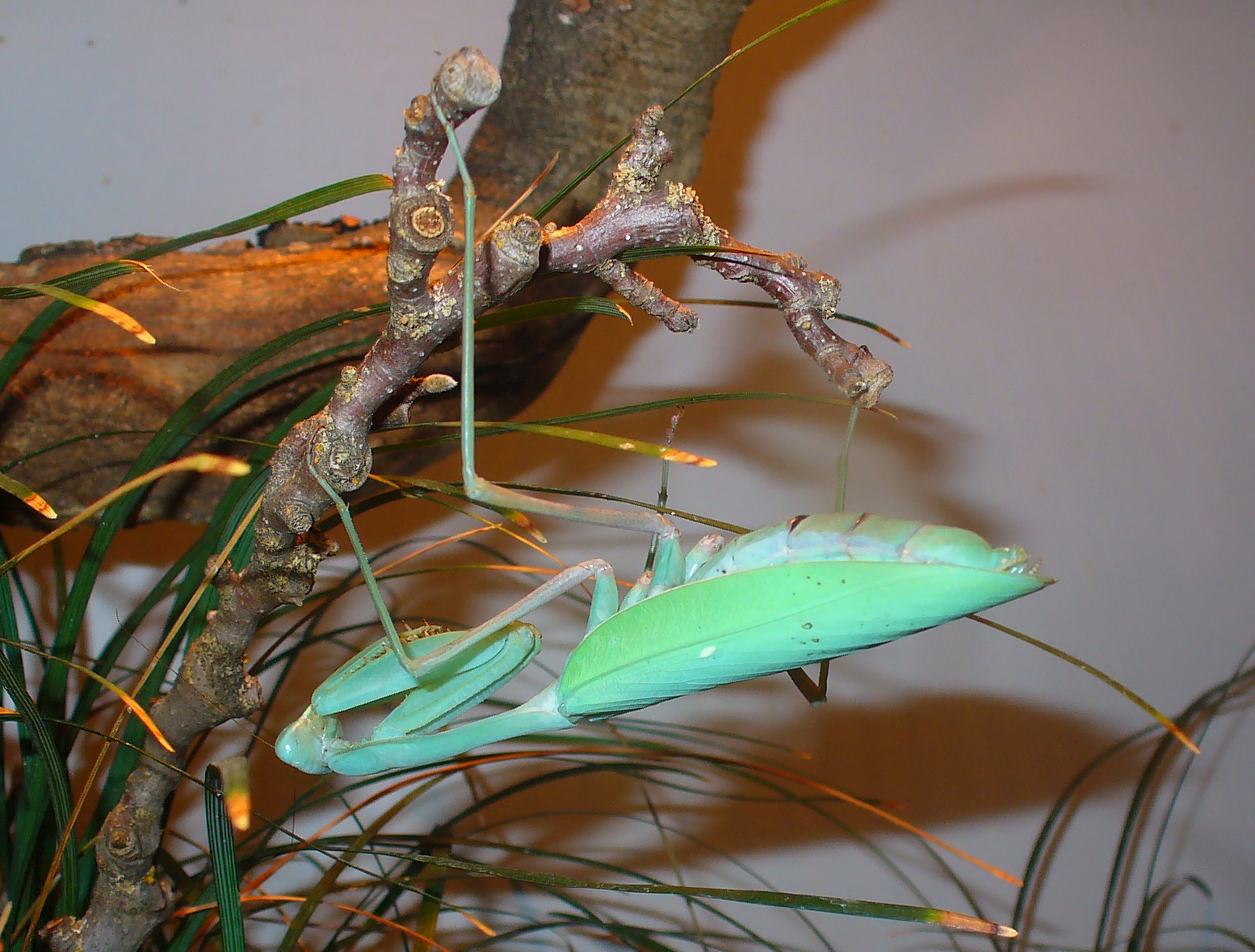
Provide secure hanging surfaces and unobstructed space below. AES recommends at least four body lengths from the hanging branch to the floor. Increase enclosure size as the animal grows.
Water & company
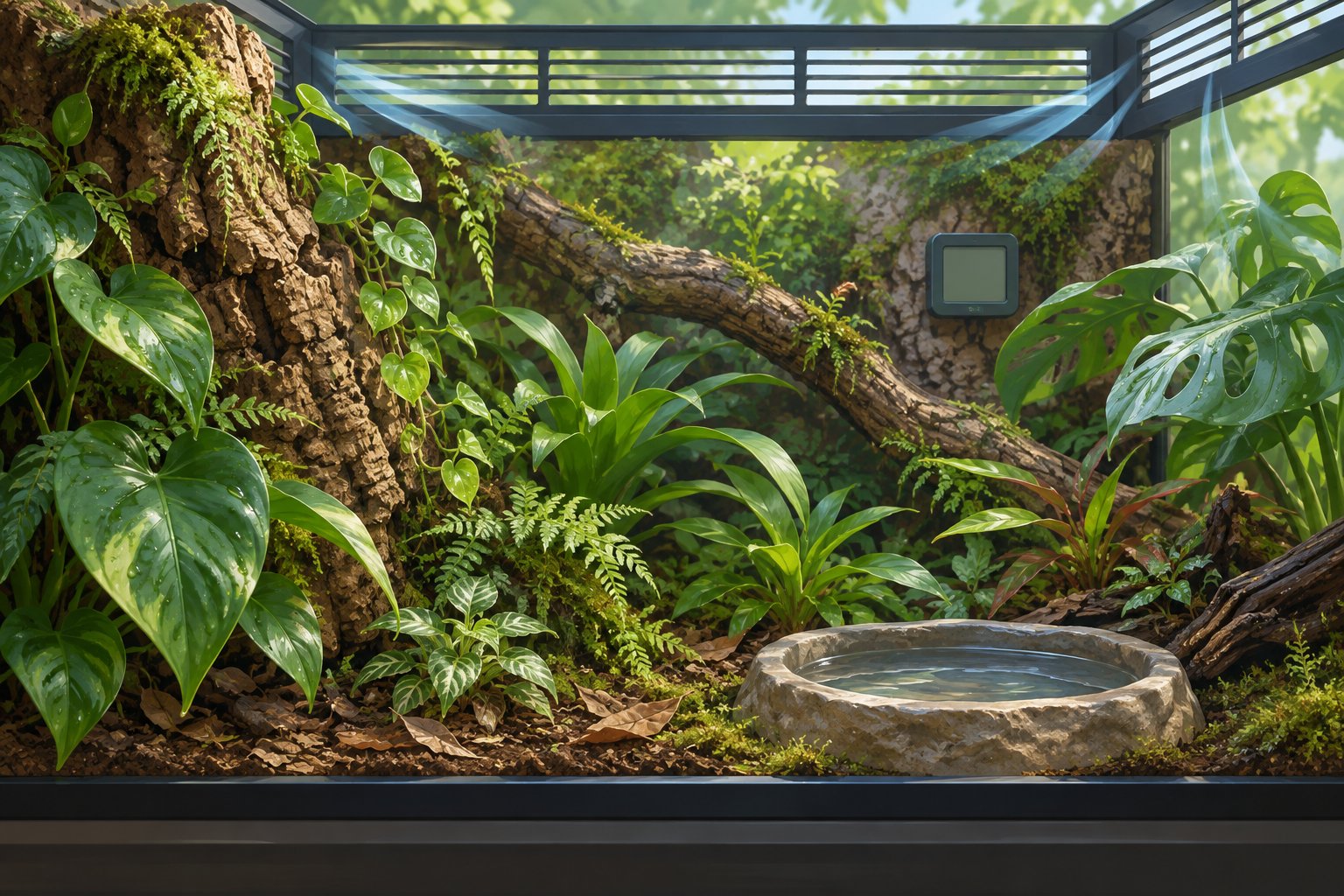
House separately to avoid cannibalism. Provide moisture without large droplets that can trap tiny nymphs. Species-specific ventilation and humidity must be established before purchase.
Limits of this guide
Do not apply one tropical temperature to every mantis. Confirm Phyllocrania paradoxa, Rhombodera extensicollis or Hierodula membranacea requirements with a species specialist; the general AES source is not a verified setup for all three.
Species guides
Read the current species guides for care needs, source disagreements and limitations.
Ghost mantis — current care guide
Sources & limitations
This overview covers shared needs only. Follow the current species guide and assess your animal’s life stage and enclosure conditions.