Choose the exact animal
Confirm scientific name, adult size, life stage, sex where relevant, natural history, activity pattern, diet, social needs and lifespan. Group labels such as “tropical” or “beginner” are not enough for a welfare decision.
Sources: GOV.UK — 2026 Code of Practice: care and accommodation
Prepare before collection
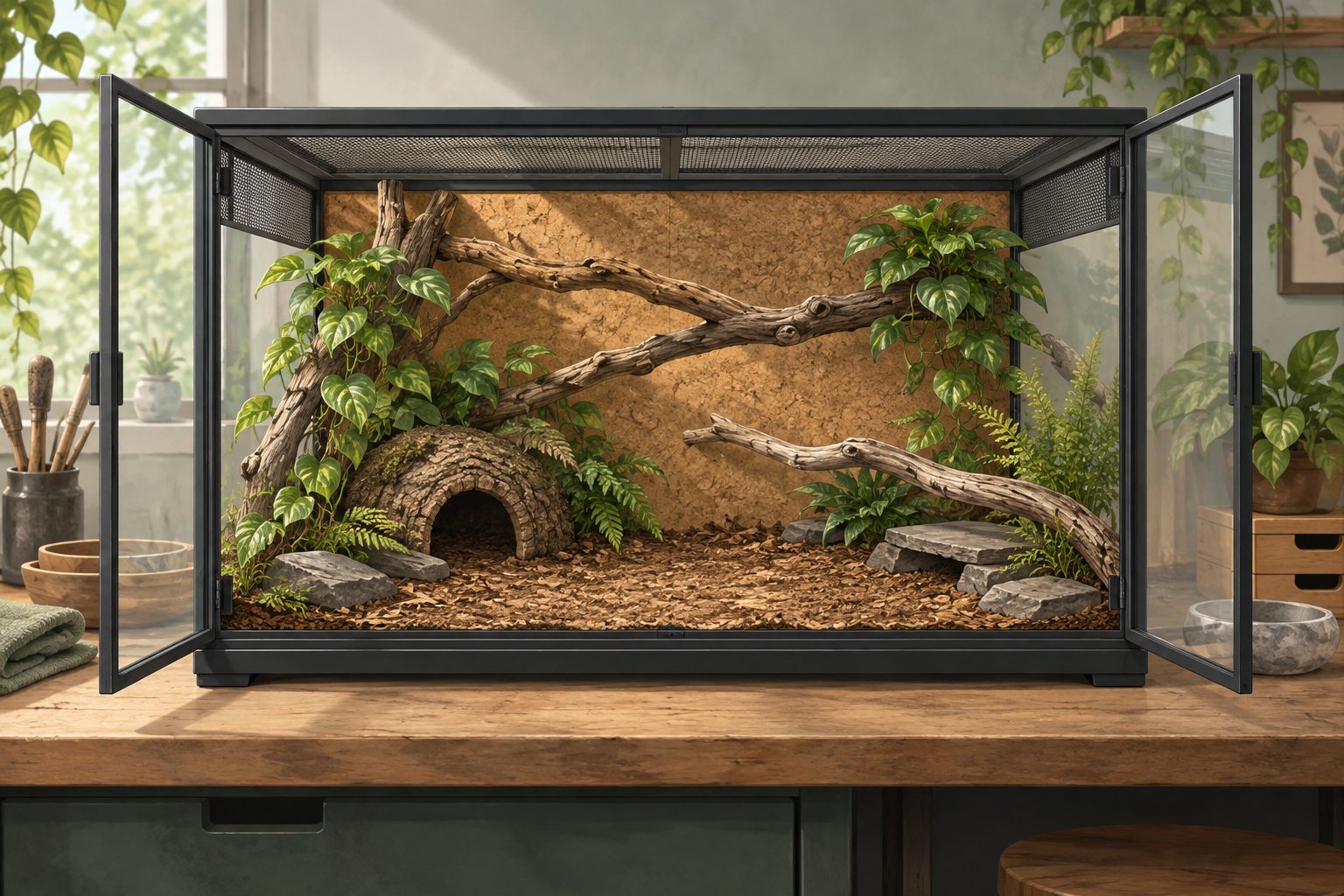
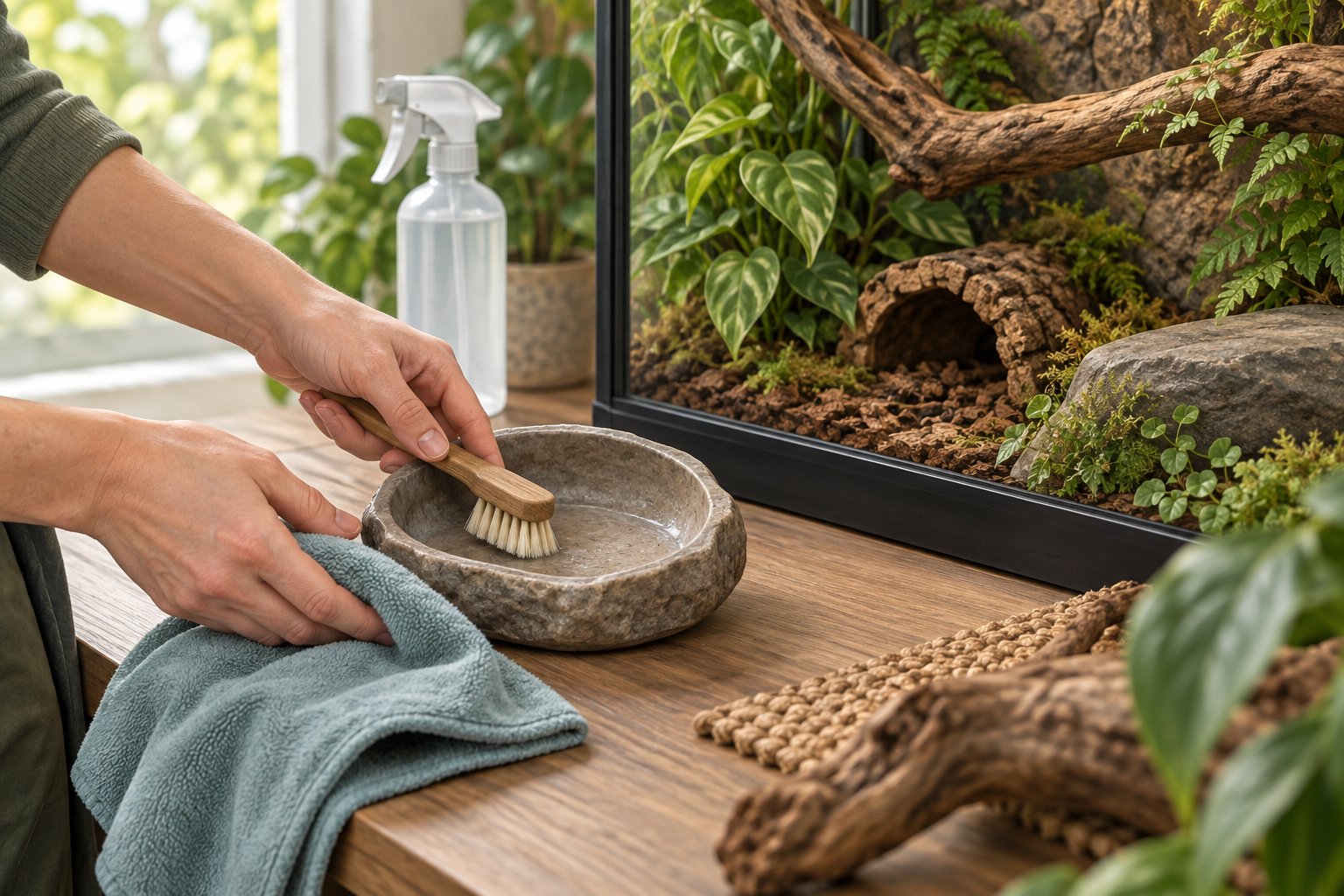
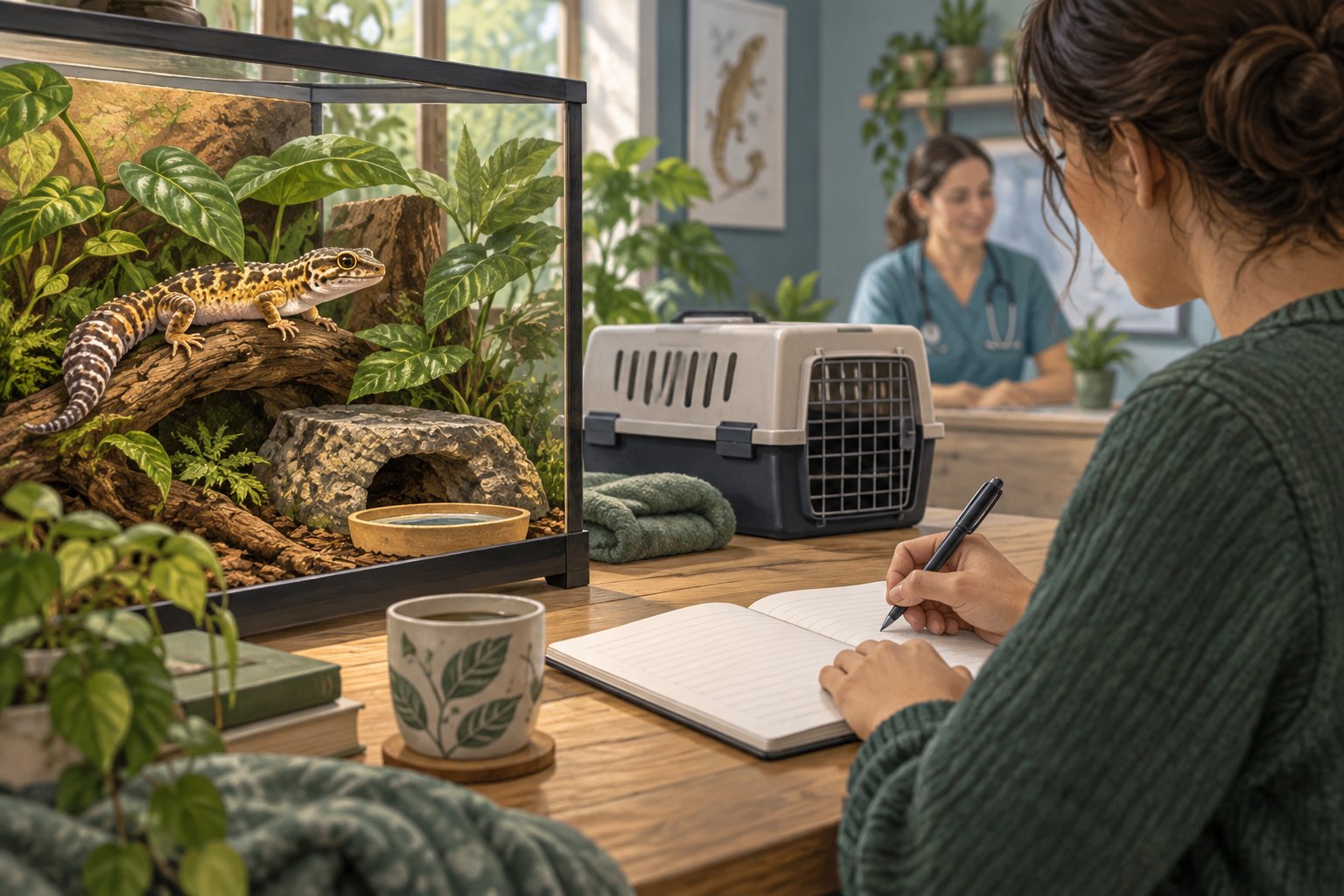
Set up and test the enclosure before the animal arrives. Establish a measured thermal or humidity gradient, safe lighting, hides, water, feeding equipment and cleaning routine. Identify an exotics veterinarian and plan quarantine.
Sources: GOV.UK — 2026 Code of Practice: care and accommodation · RSPCA — reptiles and water · RSPCA — places for reptiles to hide
Legal and sourcing checks
Rules depend on location and species. In England, some exotic-animal businesses need a local-authority licence, and protected species may involve CITES or other controls. Ask the relevant authority before advertising, buying, breeding or transporting an animal.
Sources: GOV.UK — selling animals as pets: statutory guidance
Budget the whole commitment
Include enclosure replacement, electricity, food, supplements, substrate, monitoring equipment, veterinary care, insurance where available and transport. Reptiles and invertebrates can live for many years; a low purchase price does not mean low lifetime cost.
Sources: GOV.UK — 2026 Code of Practice: care and accommodation
When not to proceed
Pause if you cannot provide the exact enclosure, measured conditions, ongoing diet, specialist veterinary access or a lawful source. Ask a rescue, welfare organisation or qualified keeper for help before acquiring the animal.
Sources: GOV.UK — selling animals as pets: statutory guidance
Sources & limitations
- GOV.UK — 2026 Code of Practice: care and accommodation
- RSPCA — reptiles and water
- RSPCA — places for reptiles to hide
- GOV.UK — selling animals as pets: statutory guidance
Source dates, product evidence and individual-animal limitations still apply.