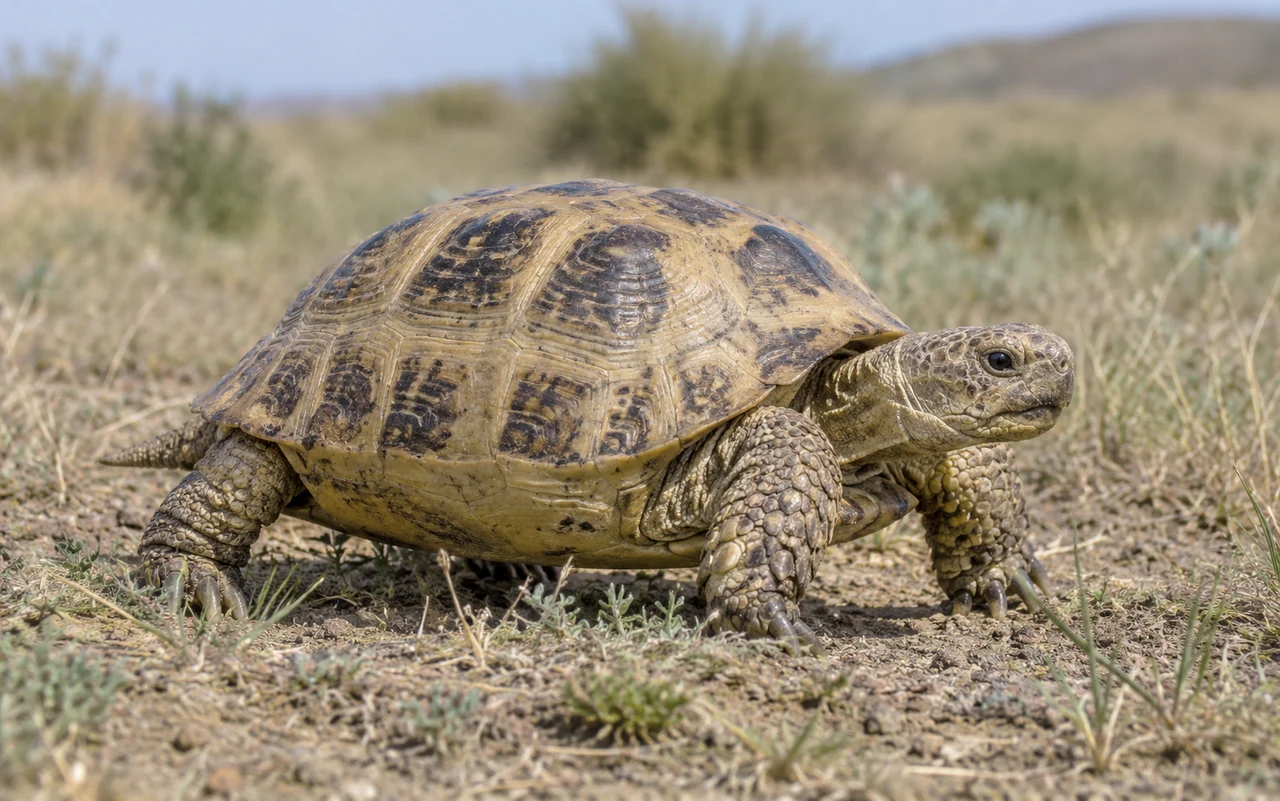
Meet the animal
Testudo horsfieldii comes from Central Asian environments and uses burrows and seasonal activity. Four toes are a characteristic feature, though injury can complicate identification. Its climate and winter plan are different from those of tropical forest tortoises.
Before you choose one
Plan for decades of care, well-drained outdoor space and a substantial indoor fallback. The proposed 2 × 2 m indoor area is a starting point. Plan suitable outdoor space as well. Find a tortoise vet and arrange someone who could take over care if needed.
Set up its home
Build a secure pen with opaque boundaries, a buried escape barrier and predator protection. Provide digging substrate, drainage and several shelters. Install masonry stably as part of a complete design; stacked blocks alone are not an enclosure. Protect the animal from dogs and ponds.
Temperature and safe heating
Tortoise Trust describes broad warming that lets body temperature rise towards 30–32°C. This is not a contact-surface target for an infrared thermometer. Have the active day-night plan reviewed and control indoor heat. Do not copy the lowest wild temperatures or automatically maintain one constant temperature.
Daylight, shade and UV
Provide strong daytime visible light, suitable UVB and full shade, with safe outdoor access when conditions suit. Glass and ordinary plastic cannot be assumed to transmit UVB. Have the measured wide-area heating and lighting arrangement reviewed rather than selecting one spotlight by wattage.
Water, moisture and airflow
Provide clean drinking water and usable burrowing refuges without cold wet ground. Drainage and rain shelter matter in the UK. Relatively dry exposed ground can coexist with less drying refuges. Ventilate climate frames; unexpected sunshine can overheat them.
Food and nutrition
Offer varied correctly identified safe weeds and fibrous leaves, with suitable grazing opportunities. Fruit and animal protein are not routine foods. Review calcium and vitamins alongside sunlight and UV, and avoid contaminated browse or rich feeding intended to force rapid growth.
Behaviour and handling
Expect persistent digging and climbing. Inspect boundaries and buried barriers and offer different shelters and grazing areas. Keep one tortoise and support the whole body for essential lifting. Never turn it upside down for entertainment or allow unsupervised dog access.
Health and life stages
Record weight, shell, feeding, urates and activity. Respiratory signs, swollen eyes, abnormal shell, injuries or persistent refusal need a tortoise vet. Winter dormancy requires an individual plan; do not cool an unsuitable, ill, underweight or newly acquired animal without clearance.
Buying and keeping records
Choose documented captive-bred stock and keep exact identification and lawful-origin documents. Check current CITES and transaction rules with APHA. Do not transfer another Testudo species’ commercial-certificate exemption to this tortoise.
Your care routine
Prepare indoor fallback, secure outdoor ground and an agreed seasonal plan before arrival. Check food, water, shelter and weather daily. Inspect boundaries, chemicals and predator access regularly. Leave holiday instructions that clearly state the current active or supervised winter routine.
YOUR CHECKLIST
0 of 8 ticked
Horsfield’s tortoise — Testudo horsfieldii
Care hub: wildformexotics.co.uk/animals/horsfields-tortoise/
Ticks are kept only while this page is open. Print or download a copy before leaving. Completing the checklist does not establish that an animal is well or an installation is safe.
Use these reminders alongside the full guide. Adjust feeding and maintenance to your animal’s condition and measured enclosure conditions.
Sources
- Captive care of the Russian tortoise (Tortoise Trust, A. C. Highfield)
- Indoor accommodation: current practical guide (Tortoise Trust)
- Reptile management and husbandry (Merck Veterinary Manual)
- UV-Tool: selecting appropriate UV lighting for reptiles and amphibians (2016) (Baines and colleagues, Journal of Zoo and Aquarium Research)
- UK reptile species equipment list (Monkfield Reptile)
- CITES import and export guidance (APHA / GOV.UK)
- Guidance on section 14 of the Wildlife and Countryside Act (GOV.UK / Defra)
- Import of pet invertebrates, amphibians and reptiles: IIN (GOV.UK / APHA and Defra)
Equipment checklist
Equipment examples for Horsfield’s tortoise, grouped by care need. Read the checks before choosing. Shop links are Amazon affiliate links. Items without a verified Amazon match have no shop link.
Plan the whole setup: These examples cover only part of the setup. Meet every care need and test the finished enclosure before arrival. Suitable equipment you already own may meet the need; optional tools are labelled.
Check each item for your animal’s size and life stage, safe access, compatible controls and measured conditions. The list does not certify an installation.
Adult enclosure, substrate and shelter
Read the care guidance for this need
Also plan for: Provide the complete adult pen and indoor climate arrangement, with secure opaque boundaries, a buried escape barrier, predator protection, drainage, digging depth and shelters. Add the substrate, hides, cover and secure supports described in the care guide. The enclosure alone does not provide them.
Temperature and safe heating
Read the care guidance for this need
Exo Terra Digital Thermometer
Model: PT2472
Records minimum and maximum air temperatures near a shelter your animal uses, to help you check the temperature plan.
Fit check: The remote probe measures air at one location. Keep it away from direct lamp heat, secure it safely and keep the display outside. Use separate probes for warm and cool areas where needed. Minimum/maximum readings help track changes; this device does not measure surfaces or control heating. Use a water-rated thermometer for submerged readings.
HabiStat Digital Dimming Thermostat Day/Night + Timer
Model: HTDD
Only for a compatible heater when extra heat is needed
Controls a compatible heater and allows separate day/night settings.
Fit check: HTDD controls compatible heaters up to 600 W, with no minimum load and a 0–50°C setting range. Socket I regulates the heater; socket II switches a separately verified load on a timer without temperature control. Never connect UVB to the dimming heater socket; the 600 W rating does not confirm T5 ballast compatibility. Guard the heater, secure the probe as instructed without tape and keep electrics dry. Check warm and cool areas with independent thermometers. The controller cannot cool a hot enclosure.
Zoo Med ReptiTemp Digital Infrared Thermometer
Model: RT-1
Checks basking and other occupied surface temperatures separately from air readings.
Fit check: Use this for surface temperatures, with air probes for air readings. Follow the distance and spot-size instructions, and account for reflective surfaces. It cannot measure internal body temperature.
Lighting, shade and UV
Read the care guidance for this need
Existing lighting may already provide a suitable day-night cycle. If you need extra lighting, use a switch or timer confirmed as compatible with its exact load, including any UVB ballast.
Solarmeter Model 6.5R UV Index Meter
Model: 6.5R
Use your own meter or arrange an exposure check
Measures UV Index at the animal’s reachable back height, with the screen and guards fitted.
Fit check: Use a 6.5 or 6.5R UV Index meter, rather than a UVB irradiance meter. Measure all reachable positions and shaded retreats through the fitted screen and guards. You can borrow a suitable meter or arrange a competent exposure check instead of buying one. Confirm UK supply if buying.
Also plan for: Agree a lighting and UV exposure plan for your animal before choosing a lamp. Keep a regular day-night cycle and accessible shade. No lamp model is selected here.
Water, humidity and ventilation
Read the care guidance for this need
Exo Terra Digital Hygrometer
Model: PT2477
Tracks the air humidity cycle near an occupied area.
Fit check: Place the remote humidity sensor inside the enclosure, away from direct heat. The reading describes air at that point, so record its position and check other areas where needed. Inspect the substrate and damp retreats directly, and keep ventilation clear. A humidity reading cannot show whether an animal has drinking water.
Also plan for: Provide the drinking water, damp retreats or safe water area described in the care guide. A sprayer and humidity gauge cannot provide these on their own.
Feeding and nutrition
Read the care guidance for this need
Also plan for: Offer varied correctly identified safe weeds and fibrous leaves, with suitable grazing opportunities.
Equipment notes: Temperature and safe heating
EQUIPMENT TO CONSIDER
Exo Terra Digital Thermometer
Model PT2472 · Remote air probe and minimum/maximum memory; place away from direct lamp radiation. Check the supplier’s current price and availability, and confirm that the item suits your installation.
Records minimum and maximum air temperatures near a shelter your animal uses, to help you check the temperature plan.
Check before choosing: The remote probe measures air at one location. Keep it away from direct lamp heat, secure it safely and keep the display outside. Use separate probes for warm and cool areas where needed. Minimum/maximum readings help track changes; this device does not measure surfaces or control heating. Use a water-rated thermometer for submerged readings.
EQUIPMENT TO CONSIDER
HabiStat Digital Dimming Thermostat Day/Night + Timer
Only for a compatible heater when extra heat is needed
Model HTDD · 600 W maximum, no minimum load; setting range 0–50°C. Socket II is timed; this model does not actively cool. Check the supplier’s current price and availability, and confirm that the item suits your installation.
Controls a compatible heater and allows separate day/night settings.
Check before choosing: HTDD controls compatible heaters up to 600 W, with no minimum load and a 0–50°C setting range. Socket I regulates the heater; socket II switches a separately verified load on a timer without temperature control. Never connect UVB to the dimming heater socket; the 600 W rating does not confirm T5 ballast compatibility. Guard the heater, secure the probe as instructed without tape and keep electrics dry. Check warm and cool areas with independent thermometers. The controller cannot cool a hot enclosure.
EQUIPMENT TO CONSIDER
Zoo Med ReptiTemp Digital Infrared Thermometer
Model RT-1 · Measures surfaces, not air. Check distance/spot size and reflective-surface limitations. Check the supplier’s current price and availability, and confirm that the item suits your installation.
Checks basking and other occupied surface temperatures separately from air readings.
Check before choosing: Use this for surface temperatures, with air probes for air readings. Follow the distance and spot-size instructions, and account for reflective surfaces. It cannot measure internal body temperature.
Equipment notes: Daylight, shade and UV
EQUIPMENT TO CONSIDER
Solarmeter Model 6.5R UV Index Meter
Use your own meter or arrange an exposure check
Model 6.5R · UV Index meter; take readings at accessible back height with screen and guards installed. Check the supplier’s current price and availability, and confirm that the item suits your installation.
Measures UV Index at the animal’s reachable back height, with the screen and guards fitted.
Check before choosing: Use a 6.5 or 6.5R UV Index meter, rather than a UVB irradiance meter. Measure all reachable positions and shaded retreats through the fitted screen and guards. You can borrow a suitable meter or arrange a competent exposure check instead of buying one. Confirm UK supply if buying.
Equipment notes: Water, moisture and airflow
EQUIPMENT TO CONSIDER
Exo Terra Digital Hygrometer
Model PT2477 · Remote humidity probe; readings describe air at the probe, not substrate moisture. Check the supplier’s current price and availability, and confirm that the item suits your installation.
Tracks the air humidity cycle near an occupied area.
Check before choosing: Place the remote humidity sensor inside the enclosure, away from direct heat. The reading describes air at that point, so record its position and check other areas where needed. Inspect the substrate and damp retreats directly, and keep ventilation clear. A humidity reading cannot show whether an animal has drinking water.