Meet the animal
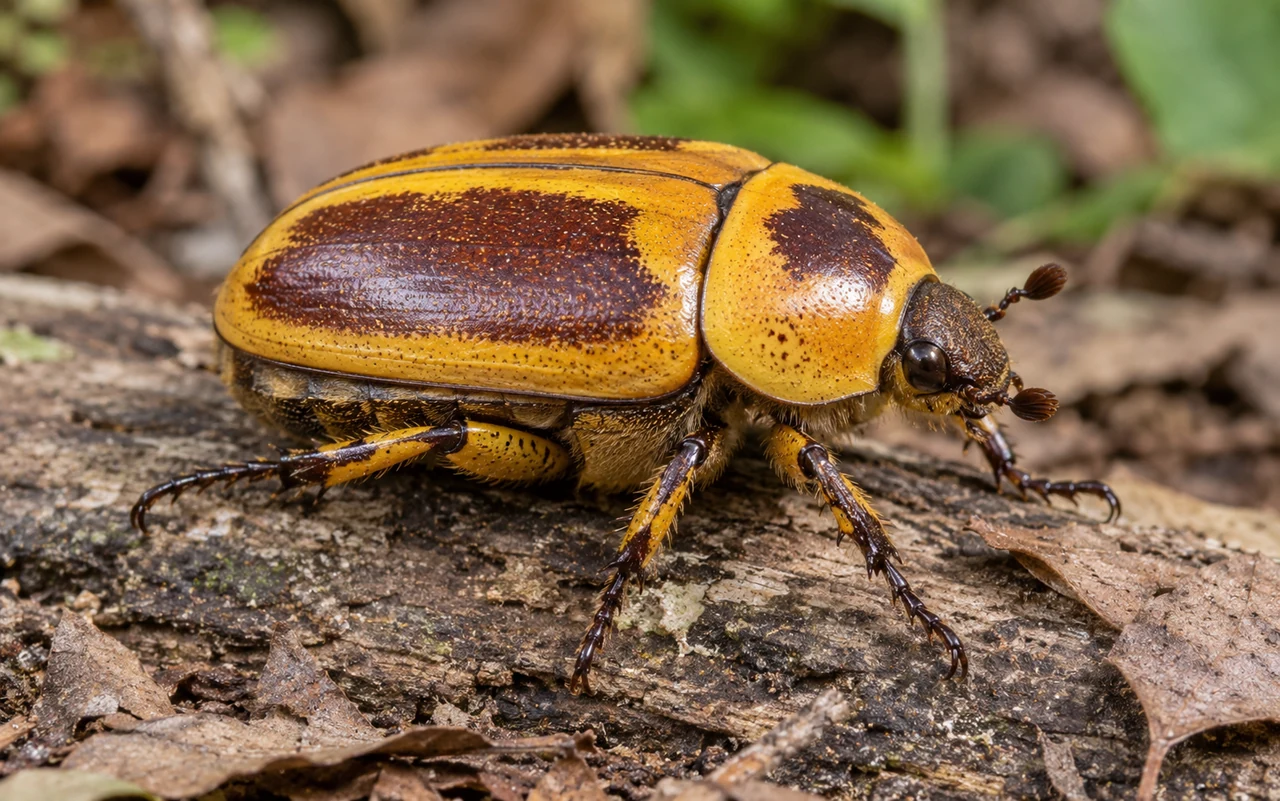
This profile covers Pachnoda marginata peregrina. Other Pachnoda forms and trade labels are not automatically equivalent. Adults have six legs and hard wing covers; buried grubs look very different and have their own feeding needs.
Before you choose one
Ask whether the purchase contains grubs, adults or mixed stages, with exact identification. Adults may live only a few months, but developing offspring extend the commitment. Arrange mature food substrate and a contained culture plan before buying.
Set up its home
The proposed small-culture layout is 30 × 30 × 45 cm, with around 15 cm of nutritious larval substrate. Scale volume to numbers; about a litre per grub is a keeper planning allowance, not a tested welfare threshold. Add stable adult climbing and righting surfaces and secure ventilation.
Temperature and safe heating
Keeper guidance describes larval conditions around 20–28°C, favouring about 25°C, with warmer local adult places. The proposed ambient 24–26°C plan needs review. Measure substrate and air separately and control any warmth. Do not heat every buried grub to a hot adult-surface value.
Daylight, shade and UV
Provide a normal daytime rhythm, useful visible light and shade. Mandatory UVB or numeric UVI is not established here. Light that encourages adult activity must not overheat larval substrate or remove cooler choices.
Water, moisture and airflow
Keep the feeding layer damp and aerated without waterlogging, allowing a drying surface. Inspect gently at depth without breaking pupal cocoons. Avoid deep open water. Substrate moisture and airflow are more useful checks than chasing a maximum humidity number.
Food and nutrition
Grubs need decayed hardwood leaves and suitable rotten wood, with correctly prepared flake soil as a reviewed option. Adults eat suitable ripe fruit and beetle food, with prompt spoilage removal. Banana or jelly for adults does not feed buried grubs, and coir alone is not complete larval food.
Behaviour and handling
Expect climbing and flight attempts from adults and hidden grubs. Provide surfaces that let an overturned beetle right itself. Leave formed pupal cocoons intact rather than digging them up repeatedly. Track stages without assuming every hidden grub is dead.
Health and life stages
Repeated deaths, failed emergence or unusual weakness needs experienced species advice and a substrate and climate review. Check new fermented medium is ready and no longer heating before adding grubs. Never force an adult out of a cocoon or use household insecticides.
Buying and keeping records
Choose a documented P. m. peregrina culture with stage and food-medium records. Confirm current import requirements and plan contained offspring care. Never release beetles, grubs or occupied substrate outdoors.
Your care routine
Prepare separate grub and adult food before arrival. Check moisture, food use and losses regularly, removing spoiled fruit. Record emergence and stage numbers where practical. Leave stage-specific holiday instructions and preserve buried cocoons during maintenance.
YOUR CHECKLIST
0 of 7 ticked
Sun beetle — Pachnoda marginata peregrina
Care hub: wildformexotics.co.uk/animals/sun-beetle/
Ticks are kept only while this page is open. Print or download a copy before leaving. Completing the checklist does not establish that an animal is well or an installation is safe.
Use these reminders alongside the full guide. Adjust feeding and maintenance to your animal’s condition and measured enclosure conditions.
Sources
- Pachnoda marginata peregrina husbandry (Keeping Insects)
- UK sun beetle keeper guide (Scuttle and Squeak)
- Guidance on section 14 of the Wildlife and Countryside Act (GOV.UK / Defra)
- Import of pet invertebrates, amphibians and reptiles: IIN (GOV.UK / APHA and Defra)
- Import or export endangered species: check if you need a CITES permit (GOV.UK / APHA and Defra)
Equipment checklist
Equipment examples for Sun beetle, grouped by care need. Read the checks before choosing. Shop links are Amazon affiliate links. Items without a verified Amazon match have no shop link.
Plan the whole setup: These examples cover only part of the setup. Meet every care need and test the finished enclosure before arrival. Suitable equipment you already own may meet the need; optional tools are labelled.
Check each item for your animal’s size and life stage, safe access, compatible controls and measured conditions. The list does not certify an installation.
Adult enclosure, substrate and shelter
Read the care guidance for this need
Also plan for: Provide around 15 cm of larval food substrate with verified retaining depth below the doors or a secure designed barrier. Add stable adult climbing/righting surfaces and allow substrate volume for the actual number of grubs. Add the substrate, hides, cover and secure supports described in the care guide. The enclosure alone does not provide them.
Temperature and safe heating
Read the care guidance for this need
Exo Terra Digital Thermometer
Model: PT2472
Records minimum and maximum air temperatures near a shelter your animal uses, to help you check the temperature plan.
Fit check: The remote probe measures air at one location. Keep it away from direct lamp heat, secure it safely and keep the display outside. Use separate probes for warm and cool areas where needed. Minimum/maximum readings help track changes; this device does not measure surfaces or control heating. Use a water-rated thermometer for submerged readings.
Lighting, shade and UV
Read the care guidance for this need
Existing lighting may already provide a suitable day-night cycle. If you need extra lighting, use a switch or timer confirmed as compatible with its exact load, including any UVB ballast.
Water, humidity and ventilation
Read the care guidance for this need
Alternative equipment
Exo Terra Mini Mister — 0.5 L
PT2489; 0.5 L hand spray bottle. The Amazon title uses 16 US fluid ounces; this is not the conflicting 1.5/2 L pressure sprayer.
Adjust to the species: do not spray the animal directly, soak every surface or treat a mister as a substitute for drinking water. Use an existing suitable fine sprayer if you have one. Follow the individual wet-dry cycle; do not spray the animal, soak every surface or substitute misting for drinking water.
A manual misting tool only where the individual care plan calls for it. Use clean water, keep the bottle hygienic and free of chemicals, and do not spray directly at the animal. Check substrate/refuge moisture and drying/airflow rather than misting to a universal schedule.
Exo Terra Digital Hygrometer
Model: PT2477
Optional air-humidity monitor
Tracks the air humidity cycle near an occupied area.
Fit check: Place the remote humidity sensor inside the enclosure, away from direct heat. The reading describes air at that point, so record its position and check other areas where needed. Inspect the substrate and damp retreats directly, and keep ventilation clear. A humidity reading cannot show whether an animal has drinking water.
Also plan for: Provide the drinking water, damp retreats or safe water area described in the care guide. A sprayer and humidity gauge cannot provide these on their own.
Feeding and nutrition
Read the care guidance for this need
Also plan for: Grubs need decayed hardwood leaves and suitable rotten wood, with correctly prepared flake soil as a reviewed option.
Equipment notes: Temperature and safe heating
EQUIPMENT TO CONSIDER
Exo Terra Digital Thermometer
Model PT2472 · Remote air probe and minimum/maximum memory; place away from direct lamp radiation. Check the supplier’s current price and availability, and confirm that the item suits your installation.
Records minimum and maximum air temperatures near a shelter your animal uses, to help you check the temperature plan.
Check before choosing: The remote probe measures air at one location. Keep it away from direct lamp heat, secure it safely and keep the display outside. Use separate probes for warm and cool areas where needed. Minimum/maximum readings help track changes; this device does not measure surfaces or control heating. Use a water-rated thermometer for submerged readings.
Equipment notes: Water, moisture and airflow
Alternative equipment
Exo Terra Mini Mister — 0.5 L
PT2489; 0.5 L hand spray bottle. The Amazon title uses 16 US fluid ounces; this is not the conflicting 1.5/2 L pressure sprayer.
Adjust to the species: do not spray the animal directly, soak every surface or treat a mister as a substitute for drinking water. Use an existing suitable fine sprayer if you have one. Follow the individual wet-dry cycle; do not spray the animal, soak every surface or substitute misting for drinking water.
A manual misting tool only where the individual care plan calls for it. Use clean water, keep the bottle hygienic and free of chemicals, and do not spray directly at the animal. Check substrate/refuge moisture and drying/airflow rather than misting to a universal schedule.
EQUIPMENT TO CONSIDER
Exo Terra Digital Hygrometer
Optional air-humidity monitor
Model PT2477 · Remote humidity probe; readings describe air at the probe, not substrate moisture. Check the supplier’s current price and availability, and confirm that the item suits your installation.
Tracks the air humidity cycle near an occupied area.
Check before choosing: Place the remote humidity sensor inside the enclosure, away from direct heat. The reading describes air at that point, so record its position and check other areas where needed. Inspect the substrate and damp retreats directly, and keep ventilation clear. A humidity reading cannot show whether an animal has drinking water.