Meet the animal
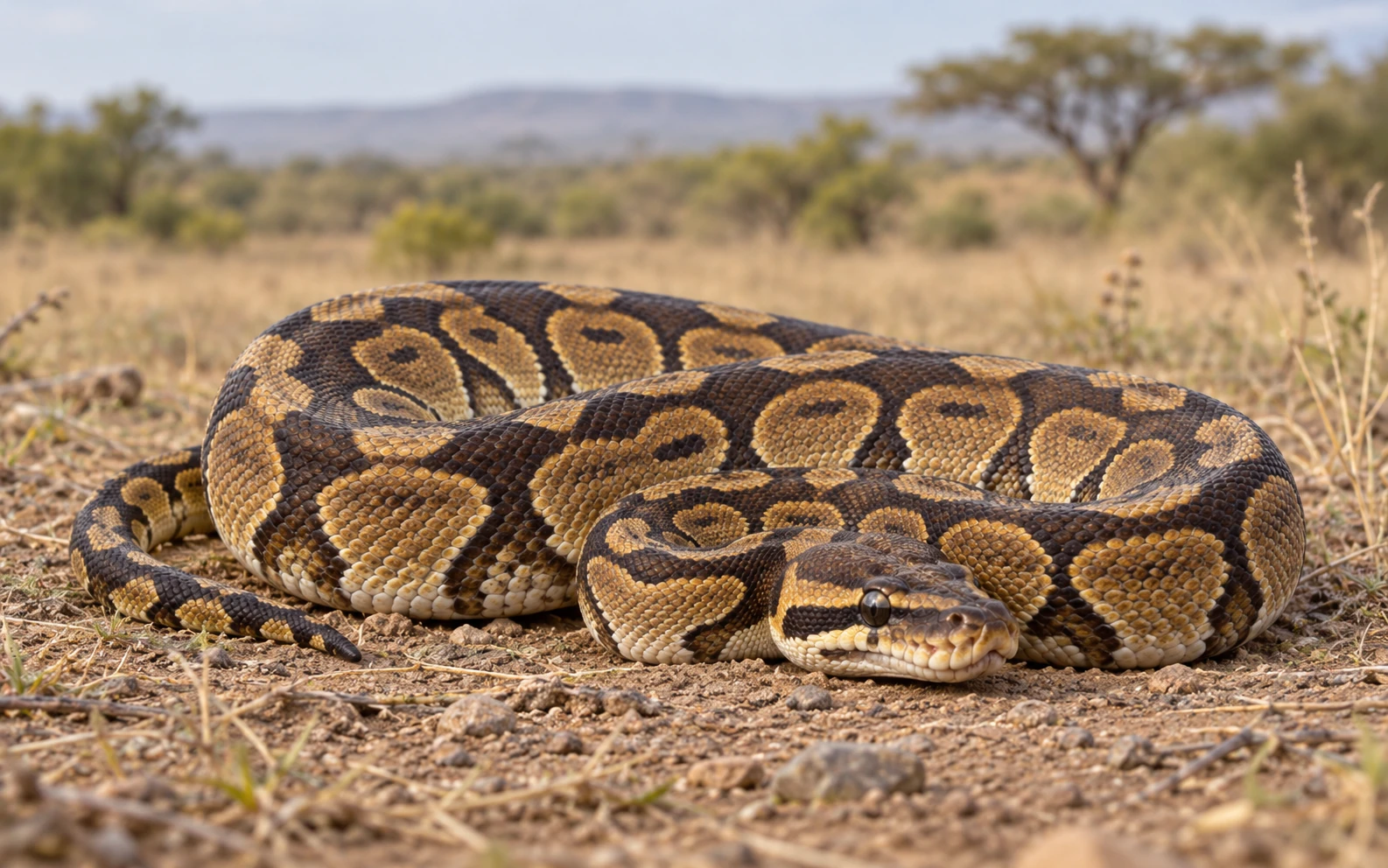
Python regius is called both the royal python and ball python. It comes from West and Central Africa, including seasonally changing landscapes. Curling into a defensive ball is not a sign that it enjoys handling. Morph names describe inherited captive traits; ask about any associated welfare concerns.
Before you choose one
Plan for a potentially 25-year commitment and an adult that may reach about 150 cm. Keep one snake and budget for enclosure upgrades, frozen prey and a reptile vet. Ask about the actual animal’s feeding history and health, including concerns associated with its line.
Set up its home
Provide usable length for full straight-line extension, with width and height at least one-third of the snake’s length under RSPCA guidance. Add snug warm and cool hides, cover and stable climbing structures. A spacious juvenile enclosure still needs plenty of shelter and gaps small enough to prevent escape.
Temperature and safe heating
Provide a warm retreat around 30–32°C and cooler air; RSPCA describes around 24–26°C at the cool end. Use compatible thermostatic control and independent measurements inside hides and at accessible surfaces. Any night change must preserve suitable conditions. Never allow contact with an unguarded heater.
Daylight, shade and UV
Keep a day-night rhythm and opaque shade. RSPCA suggests UVI around 1, lower for albinos, while ReptiFiles suggests 2–3. Have the exact installation assessed for pigmentation, reachable height and retreats. UV Index is measured exposure, not a bulb percentage; both warm and cool concealed choices must remain available.
Water, moisture and airflow
RSPCA gives 50–60% background humidity with higher moisture during shedding; ReptiFiles advises higher routine humidity. Have the overall moisture plan reviewed. Provide a usable humid hide and clean water, with dry clean contact surfaces. Measure at snake level and investigate poor sheds rather than peeling eye coverings.
Food and nutrition
Offer suitably sized thawed whole prey, with meals matched to growth and body condition. Growing juveniles generally need more frequent feeding than adults. Record refusal and weight trends. Persistent refusal with weight loss or other changes needs a reptile vet, not repeated live-rodent offers or force-feeding.
Behaviour and handling
Let the snake settle before optional handling. Support its body and do not forcibly uncurl a defensive animal. Leave at least 48 hours after feeding. Frequent exposure is not a cure for insecure housing; provide sheltered exploration and quiet retreats.
Health and life stages
Wheezing, discharge, lesions, mites, repeated regurgitation or declining condition need veterinary attention. Mature and reproductive animals may differ in feeding and activity. Keep sexes apart, avoid invasive home sexing and do not deliberately chill a pet to trigger a seasonal response.
Buying and keeping records
Choose documented captive-bred stock and keep lawful-origin records. Check the current CITES entry and exact APHA import or export requirements before movement. A pet morph is not automatically exempt. Quarantine arrivals separately and keep cleaning tools out of food areas.
Your care routine
Before arrival, verify warm, cool, humid and concealed choices in the furnished enclosure. Each day, check the animal, water and controls. Inspect substrate beneath hides, probe placement, heavy furnishings and escape gaps. Record feeding, shedding and weight so changes are easier to recognise.
YOUR CHECKLIST
0 of 7 ticked
Royal python — Python regius
Care hub: wildformexotics.co.uk/animals/royal-python/
Ticks are kept only while this page is open. Print or download a copy before leaving. Completing the checklist does not establish that an animal is well or an installation is safe.
Use these reminders alongside the full guide. Adjust feeding and maintenance to your animal’s condition and measured enclosure conditions.
Sources
- Python regius (Animal Diversity Web contributors / Animal Diversity Web, University of Michigan)
- How to care for a royal python (RSPCA)
- Python regius (The Reptile Database)
- Royal python care (December 2024) (Royal Veterinary College)
- Ball python humidity, temperature and lighting (ReptiFiles)
- How much UVB does my reptile need? The UV-Tool (Baines et al.; Journal of Zoo and Aquarium Research)
- Import or export endangered species: check if you need a CITES permit (GOV.UK / APHA and Defra)
- Endangered species: certificates for commercial use (GOV.UK / APHA and Defra)
- Guidance on section 14 of the Wildlife and Countryside Act (GOV.UK / Defra)
- Import of pet invertebrates, amphibians and reptiles: IIN (GOV.UK / APHA and Defra)
Equipment checklist
Equipment examples for Royal python, grouped by care need. Read the checks before choosing. Shop links are Amazon affiliate links. Items without a verified Amazon match have no shop link.
Plan the whole setup: These examples cover only part of the setup. Meet every care need and test the finished enclosure before arrival. Suitable equipment you already own may meet the need; optional tools are labelled.
Check each item for your animal’s size and life stage, safe access, compatible controls and measured conditions. The list does not certify an installation.
Secure enclosure
Essential care need
Usable adult dimensions and escape-proof ventilation
Plan first: Verify inside measurements after décor and lamp guards; choose floor or climbing style for the species.
Temperature control and measurement
Essential care need
A thermostat for every heat source plus independent warm/cool readings
Plan first: Match dimming or on/off control to the heater, guard exposed lamps and put probes at animal level.
Exo Terra Digital Thermometer
Model: PT2472
Measure air temperature at animal height. Take independent warm and cool readings where the care plan needs a gradient.
Fit check: The remote probe measures air at one location. Keep it away from direct lamp heat, secure it safely and keep the display outside. Use separate probes for warm and cool areas where needed. Minimum/maximum readings help track changes; this device does not measure surfaces or control heating. Use a water-rated thermometer for submerged readings.
HabiStat Digital Dimming Thermostat Day/Night + Timer
Model: HTDD
Only for a compatible heater when extra heat is needed
Regulate a compatible heater using separate day and night settings. The thermostat does not produce heat.
Fit check: HTDD controls compatible heaters up to 600 W, with no minimum load and a 0–50°C setting range. Socket I regulates the heater; socket II switches a separately verified load on a timer without temperature control. Never connect UVB to the dimming heater socket; the 600 W rating does not confirm T5 ballast compatibility. Guard the heater, secure the probe as instructed without tape and keep electrics dry. Check warm and cool areas with independent thermometers. The controller cannot cool a hot enclosure.
Zoo Med ReptiTemp Digital Infrared Thermometer
Model: RT-1
Spot-check basking surfaces and other accessible surfaces; use an air probe for air temperature.
Fit check: Use this for surface temperatures, with air probes for air readings. Follow the distance and spot-size instructions, and account for reflective surfaces. It cannot measure internal body temperature.
Also plan for: Select the heat source, fitting and guard for this enclosure and room before buying the controller; no heater wattage is selected here.
Lighting and shade
Essential care need
A predictable day/night cycle and species-appropriate measured UV gradient
Plan first: Check the installed lamp, mesh, distance and animal-accessible basking position; preserve zero-UV shade.
Solarmeter Model 6.5R UV Index Meter
Model: 6.5R
Use your own meter or arrange an exposure check
Measure UV Index at the animal’s reachable basking and resting positions, with the fitted screen and guards in place.
Fit check: Use a 6.5 or 6.5R UV Index meter, rather than a UVB irradiance meter. Measure all reachable positions and shaded retreats through the fitted screen and guards. You can borrow a suitable meter or arrange a competent exposure check instead of buying one. Confirm UK supply if buying.
Also plan for: If a timer is needed, choose one confirmed as compatible with the actual lighting load, including the UVB ballast. A suitable existing timed socket may meet the need. Agree a lighting and UV exposure plan for your animal before choosing a lamp. Keep a regular day-night cycle and accessible shade. No lamp model is selected here.
Water and hygiene
Essential care need
Accessible clean water and species-safe cleaning tools
Plan first: Choose a stable bowl/ledge sized for the animal and clean it when fouled.
Exo Terra Water Dish X-Large
Model: PT2804
Provide a larger drinking-water reservoir; check its usable basin against the actual snake.
Fit check: PT2804 measures 23.5 × 28.5 × 7 cm externally. Check the usable basin, stability, safe water depth and easy entry and exit for your animal. Outside measurements do not establish a soaking fit. Clean and refresh water at least daily and whenever soiled. Use a larger basin if your animal’s care plan requires one.
Exo Terra Digital Hygrometer
Model: PT2477
Track air humidity at an occupied position, alongside checks of ventilation and substrate moisture.
Fit check: Place the remote humidity sensor inside the enclosure, away from direct heat. The reading describes air at that point, so record its position and check other areas where needed. Inspect the substrate and damp retreats directly, and keep ventilation clear. A humidity reading cannot show whether an animal has drinking water.
Ground cover and hides
Essential care need
Secure warm/cool retreats and a substrate matched to age and health
Plan first: Avoid sharp material and collapse risks; use a separate clean humid hide when required.
Alternative equipment
Zoo Med Natural Cork Round — select actual dimensions
Three natural small cork rounds; lengths, openings and shapes vary. One natural medium cork round; lengths, openings and shapes vary.
Choose actual dimensions and openings for this individual, support securely and avoid trapping or fall hazards. This is one component, not the complete set of retreats, broad resting surfaces or a grippable moult ceiling.
Select and, where appropriate, cut an actual piece to fit the animal and enclosure. Secure it without trapping gaps and keep hard pieces outside tarantula fall zones. Cork is a refuge or climbing component, not food substrate or a complete moulting ceiling.
Use only if the actual delivered opening and length fit the animal and leave its required usable enclosure space. Secure the piece and avoid hard fall zones. This option is not an automatic upgrade for a small spider enclosure.
Also plan for: Select close-fitting warm and cool hides and the burrowing substrate separately. An open cork round alone does not complete this need.
Frozen prey and feeding tools
Essential care need
Appropriately sized fully thawed dead rodents and secure tongs
Plan first: No live rodents; match prey and interval to life stage and body condition.
Also plan for: Select appropriately sized frozen whole prey and a feeding tool with enough reach for this individual. The 28 cm maintenance tweezers are not selected as an adult snake feeding tool.