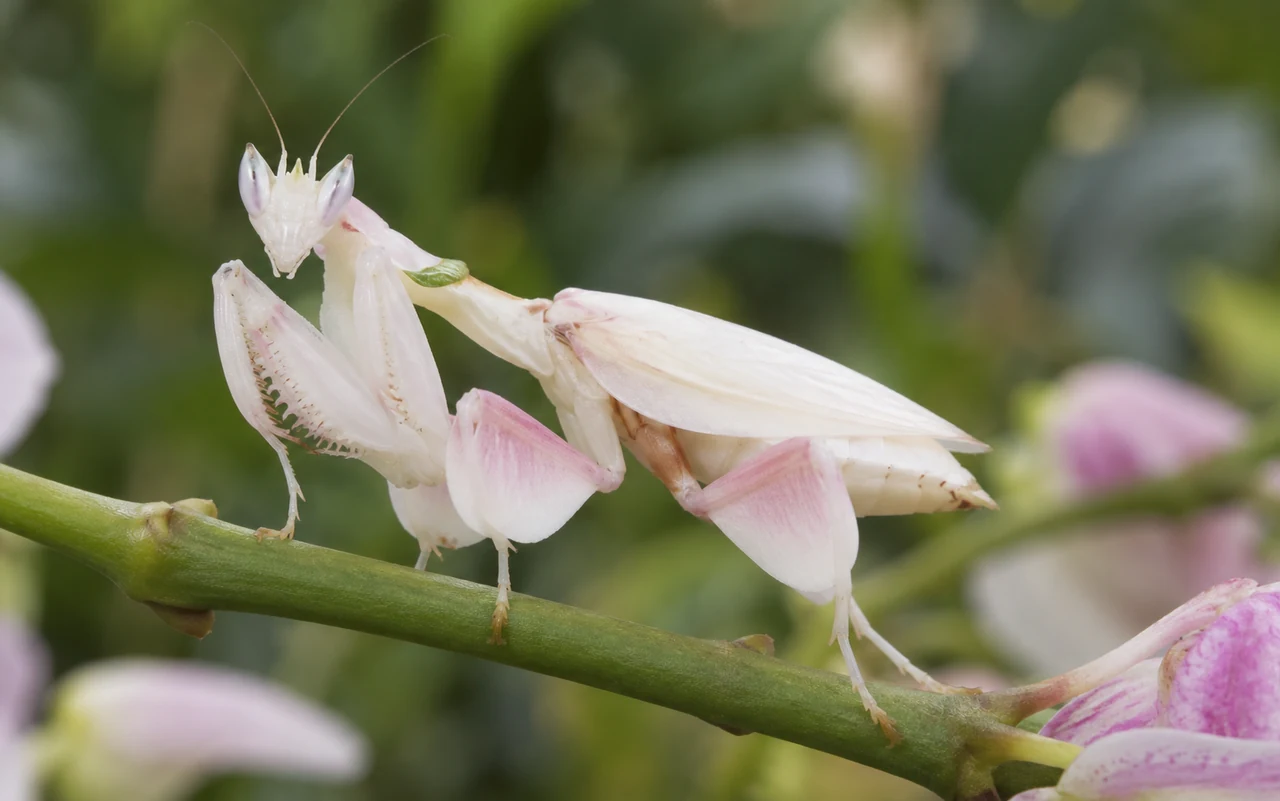
Meet the animal
Hymenopus coronatus is a South-East Asian mantis with petal-like leg lobes. It has six legs, including the folded catching forelegs. Pink and white colour varies and cannot prove locality. Adult females and males differ greatly in size.
Before you choose one
Ask for instar, meaning developmental stage, sexing evidence and accepted prey. Arrange dependable fly cultures and backup supplies. Keep one delicate observation animal; breeding and cohabitation are separate specialist tasks.
Set up its home
The proposed female layout is 30 × 30 × 45 cm. Fit secure overhead grip and measure free drop after furnishing. AES recommends at least four body lengths beneath the moult perch; the species guide’s three-length enclosure height is a different rule. Keep the hanging path unobstructed and scale security for nymphs.
Measure the clear hanging space below the actual grip after furnishing. Nominal enclosure height does not establish the usable moulting drop.
Temperature and safe heating
The species keeper guide favours around 28°C and nights at least around 18°C. The proposed 25–28°C daytime band needs stage-specific review, rather than using the source’s hottest tolerance as a target. Measure the occupied position and avoid hot lamps above hanging insects.
Daylight, shade and UV
Use an ordinary day-night rhythm, about 12 hours of daytime light, and shade. The guidance used here does not establish a UVB requirement or a numerical UVI target. Decorative flowers and intense plant lamps are not care prerequisites.
Water, moisture and airflow
Keeper advice gives 60–80% humidity but describes nymphs as needing drier management than adults. Review the actual stage, offer fine droplets on surfaces and allow ventilation and drying. Do not soak the animal or seal the box to retain the highest reading.
Food and nutrition
Offer cultured flying prey sized to the instar, from tiny fruit flies to suitable larger flies. Observe capture without putting prey into the mouth. Remove disturbing or biting insects before moulting. Flowers can provide camouflage, but they are not food.
Behaviour and handling
Keep singly and preserve the chosen hanging route during pre-moult. Wait for the new body to harden before feeding or necessary movement. Do not pull feet from mesh or make the animal hang from hands for photographs. Encourage voluntary transfer onto a perch.
Health and life stages
Persistent weak grip, injury, distorted moulting or refusal with declining condition needs experienced invertebrate-veterinary advice. Check clearance, airflow and prey size. Do not peel old skin away or use household insecticides.
Buying and keeping records
Choose documented captive-bred H. coronatus with current stage and feeding records. Confirm current import requirements before an overseas order. Keep egg cases contained and plan for offspring before breeding; never release insects or feeders outdoors.
Your care routine
Prepare the correct fly supply and clear hanging space before arrival. Check grip, droplets, ventilation and security regularly. Remove waste without disturbing a moult. Leave stage and last-meal records for holiday cover and recheck clearance after replacing foliage.
YOUR CHECKLIST
0 of 8 ticked
Orchid mantis — Hymenopus coronatus
Care hub: wildformexotics.co.uk/animals/orchid-mantis/
Ticks are kept only while this page is open. Print or download a copy before leaving. Completing the checklist does not establish that an animal is well or an installation is safe.
Use these reminders alongside the full guide. Adjust feeding and maintenance to your animal’s condition and measured enclosure conditions.
Sources
- Firsthand Orchid mantis husbandry (Keeping Insects)
- Praying mantid care (Amateur Entomologists’ Society)
- UK mantis listing including Hymenopus coronatus (Bug Pets)
- Guidance on section 14 of the Wildlife and Countryside Act (GOV.UK / Defra)
- Import of pet invertebrates, amphibians and reptiles: IIN (GOV.UK / APHA and Defra)
- Import or export endangered species: check if you need a CITES permit (GOV.UK / APHA and Defra)
Equipment checklist
Equipment examples for Orchid mantis, grouped by care need. Read the checks before choosing. Shop links are Amazon affiliate links. Items without a verified Amazon match have no shop link.
Plan the whole setup: These examples cover only part of the setup. Meet every care need and test the finished enclosure before arrival. Suitable equipment you already own may meet the need; optional tools are labelled.
Check each item for your animal’s size and life stage, safe access, compatible controls and measured conditions. The list does not certify an installation.
Adult enclosure, substrate and shelter
Read the care guidance for this need
Alternative equipment
Exo Terra Pro Paludarium 30 × 30 × 60 cm
PT4402; nominal external 30 × 30 × 60 cm; front-opening glass, adjustable ventilation, lockable stainless-steel mesh top.
Secure doors, cables and vents; check the smallest life stage and actual usable space. External dimensions are not usable internal space. Check actual individual size, access, secure gaps, load support, furnishing clearance and any substrate depth before choosing this example. Measure at least four adult body lengths of unobstructed hanging space below the actual grip, after substrate and food stems; fit secure stage-appropriate roof grip.
Measure the finished usable floor and height after substrate and furnishings against this guide. Check doors, vents and cable gaps for the actual animal and life stage. Secure the lid, test airflow and temperature, and keep lamps inaccessible. For terrestrial layouts retain the land floor; close and secure any drain rather than adding a water pool. Provide secure stage-appropriate overhead grip and measure the unobstructed drop beneath it: at least four actual body lengths for mantises or three adult body lengths for stick/leaf insects. Include soil depth, food stems and protected water vessels in that measurement; choose a larger enclosure if it fails. Very small nymphs may need a separate fine-gap nursery and accessible prey.
Also plan for: Add the substrate, hides, cover and secure supports described in the care guide. The enclosure alone does not provide them.
Temperature and safe heating
Read the care guidance for this need
Exo Terra Digital Thermometer
Model: PT2472
Records minimum and maximum air temperatures near a shelter your animal uses, to help you check the temperature plan.
Fit check: The remote probe measures air at one location. Keep it away from direct lamp heat, secure it safely and keep the display outside. Use separate probes for warm and cool areas where needed. Minimum/maximum readings help track changes; this device does not measure surfaces or control heating. Use a water-rated thermometer for submerged readings.
Lighting, shade and UV
Read the care guidance for this need
Existing lighting may already provide a suitable day-night cycle. If you need extra lighting, use a switch or timer confirmed as compatible with its exact load, including any UVB ballast.
Water, humidity and ventilation
Read the care guidance for this need
Alternative equipment
Exo Terra Mini Mister — 0.5 L
PT2489; 0.5 L hand spray bottle. The Amazon title uses 16 US fluid ounces; this is not the conflicting 1.5/2 L pressure sprayer.
Adjust to the species: do not spray the animal directly, soak every surface or treat a mister as a substitute for drinking water. Use an existing suitable fine sprayer if you have one. Follow the individual wet-dry cycle; do not spray the animal, soak every surface or substitute misting for drinking water.
A manual misting tool only where the individual care plan calls for it. Use clean water, keep the bottle hygienic and free of chemicals, and do not spray directly at the animal. Check substrate/refuge moisture and drying/airflow rather than misting to a universal schedule.
Exo Terra Digital Hygrometer
Model: PT2477
Optional air-humidity monitor
Tracks the air humidity cycle near an occupied area.
Fit check: Place the remote humidity sensor inside the enclosure, away from direct heat. The reading describes air at that point, so record its position and check other areas where needed. Inspect the substrate and damp retreats directly, and keep ventilation clear. A humidity reading cannot show whether an animal has drinking water.
Also plan for: Provide the drinking water, damp retreats or safe water area described in the care guide. A sprayer and humidity gauge cannot provide these on their own.
Feeding and nutrition
Read the care guidance for this need
Also plan for: Offer cultured flying prey sized to the instar, from tiny fruit flies to suitable larger flies.
Equipment notes: Set up its home
Alternative equipment
Exo Terra Pro Paludarium 30 × 30 × 60 cm
PT4402; nominal external 30 × 30 × 60 cm; front-opening glass, adjustable ventilation, lockable stainless-steel mesh top.
Secure doors, cables and vents; check the smallest life stage and actual usable space. External dimensions are not usable internal space. Check actual individual size, access, secure gaps, load support, furnishing clearance and any substrate depth before choosing this example. Measure at least four adult body lengths of unobstructed hanging space below the actual grip, after substrate and food stems; fit secure stage-appropriate roof grip.
Measure the finished usable floor and height after substrate and furnishings against this guide. Check doors, vents and cable gaps for the actual animal and life stage. Secure the lid, test airflow and temperature, and keep lamps inaccessible. For terrestrial layouts retain the land floor; close and secure any drain rather than adding a water pool. Provide secure stage-appropriate overhead grip and measure the unobstructed drop beneath it: at least four actual body lengths for mantises or three adult body lengths for stick/leaf insects. Include soil depth, food stems and protected water vessels in that measurement; choose a larger enclosure if it fails. Very small nymphs may need a separate fine-gap nursery and accessible prey.
Equipment notes: Temperature and safe heating
EQUIPMENT TO CONSIDER
Exo Terra Digital Thermometer
Model PT2472 · Remote air probe and minimum/maximum memory; place away from direct lamp radiation. Check the supplier’s current price and availability, and confirm that the item suits your installation.
Records minimum and maximum air temperatures near a shelter your animal uses, to help you check the temperature plan.
Check before choosing: The remote probe measures air at one location. Keep it away from direct lamp heat, secure it safely and keep the display outside. Use separate probes for warm and cool areas where needed. Minimum/maximum readings help track changes; this device does not measure surfaces or control heating. Use a water-rated thermometer for submerged readings.
Equipment notes: Water, moisture and airflow
Alternative equipment
Exo Terra Mini Mister — 0.5 L
PT2489; 0.5 L hand spray bottle. The Amazon title uses 16 US fluid ounces; this is not the conflicting 1.5/2 L pressure sprayer.
Adjust to the species: do not spray the animal directly, soak every surface or treat a mister as a substitute for drinking water. Use an existing suitable fine sprayer if you have one. Follow the individual wet-dry cycle; do not spray the animal, soak every surface or substitute misting for drinking water.
A manual misting tool only where the individual care plan calls for it. Use clean water, keep the bottle hygienic and free of chemicals, and do not spray directly at the animal. Check substrate/refuge moisture and drying/airflow rather than misting to a universal schedule.
EQUIPMENT TO CONSIDER
Exo Terra Digital Hygrometer
Optional air-humidity monitor
Model PT2477 · Remote humidity probe; readings describe air at the probe, not substrate moisture. Check the supplier’s current price and availability, and confirm that the item suits your installation.
Tracks the air humidity cycle near an occupied area.
Check before choosing: Place the remote humidity sensor inside the enclosure, away from direct heat. The reading describes air at that point, so record its position and check other areas where needed. Inspect the substrate and damp retreats directly, and keep ventilation clear. A humidity reading cannot show whether an animal has drinking water.