Meet the animal
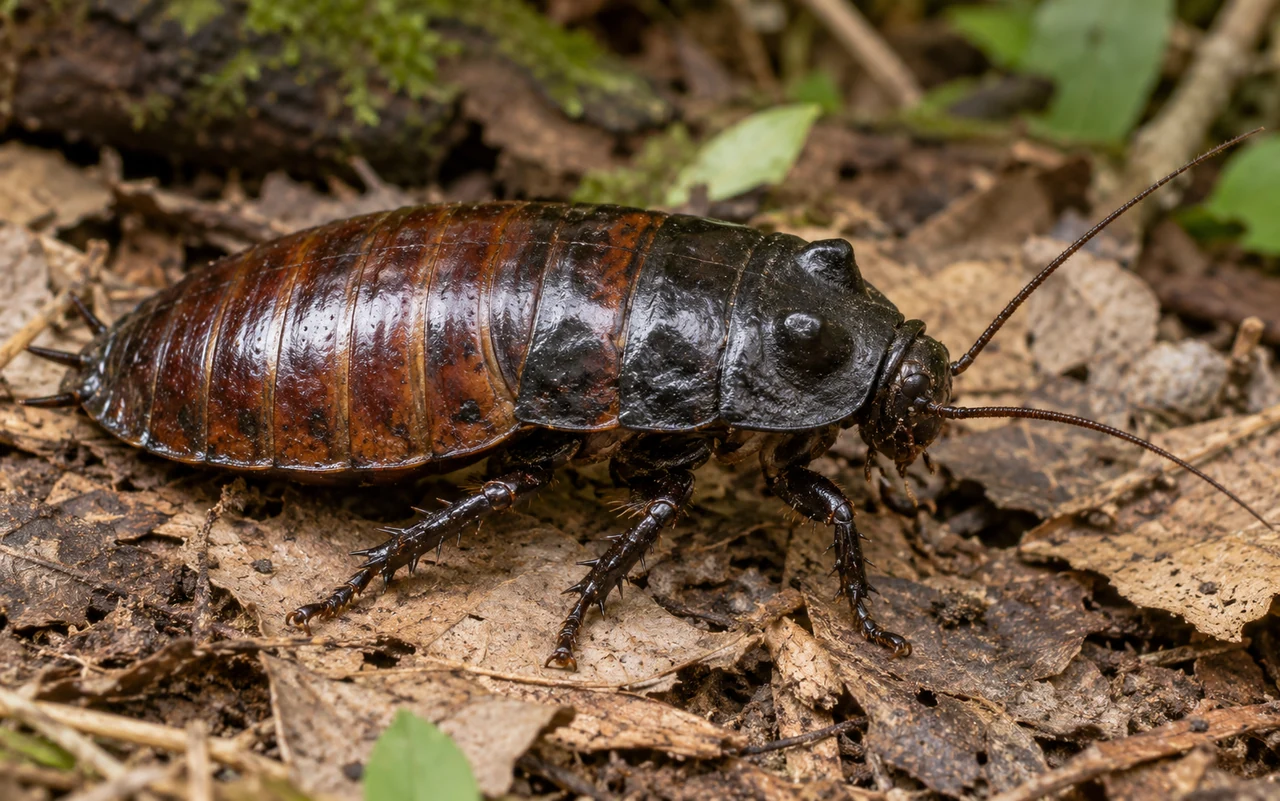
Gromphadorhina portentosa is a wingless Madagascan cockroach that hisses by pushing air through breathing openings. Males usually have more prominent bumps behind the head. Other hissers and hybrids occur in trade, so appearance alone cannot certify a pure species line.
Before you choose one
Plan a continuing colony rather than assuming two adults remain two. Females retain developing eggs internally and release young nymphs. Ask about species and breeding history and arrange contained surplus management. Warmer conditions can increase breeding; heat is not simply a way to improve viewing.
Set up its home
The proposed starter layout is 45 × 45 × 60 cm with stable climbing structures and several retreats. Expand or separate as numbers grow. Secure lids, doors and cables with nymph-safe ventilation. These insects climb glass, so smooth walls do not make containment reliable.
Temperature and safe heating
University colony guidance describes around 22–24°C, with more breeding at warmer conditions. Measure minima and maxima before adding heat. Older suggestions for heat rocks or unregulated mats are not adopted. Preserve cooler shaded choices and avoid drying every retreat.
Daylight, shade and UV
Use a normal day-night rhythm with dark shelters. No mandatory UVB or numeric UVI target is established in the institutional guidance. A bright basking lamp is not a default requirement.
Water, moisture and airflow
Provide moist refuges with airflow and drier choices, avoiding saturated substrate and moulding food. Use hydration methods safe for the smallest nymphs. Deep open bowls can drown them, so review depth and exits rather than borrowing an adult reptile bowl unchanged.
Food and nutrition
Offer a suitable balanced dry roach or insect feed with modest fresh vegetable and fruit variety. Keep dry food from becoming wet and mouldy and remove fermenting leftovers. One sweet fruit is not a balanced replacement, and small nymphs still need safe hydration.
Behaviour and handling
Expect climbing, social interactions and male territorial behaviour. Provide several shelters and check for persistent exclusion or injury. Use gentle contained transfers without pulling gripping feet free. Hissing is communication or defence, not a reason to keep provoking the colony.
Health and life stages
Repeated deaths, moult problems or unusual weakness need experienced culture or veterinary advice. Record approximate numbers, growth and food use and review airflow, diet and climate. Identify associated organisms before treatment; do not use improvised insecticide or automatic mite removal.
Buying and keeping records
Choose identified captive stock and retain any hybrid uncertainty. Confirm current import requirements and plan nymph containment and rehoming. Never release non-native cockroaches or occupied culture material outdoors.
Your care routine
Test nymph security, retreats and safe hydration before arrival. Check food, moisture and unusual losses regularly. Remove spoiled extras without sprays and review colony growth. Leave separate dry-food, fresh-food and water instructions for holiday care.
YOUR CHECKLIST
0 of 8 ticked
Madagascan hissing cockroach — Gromphadorhina portentosa
Care hub: wildformexotics.co.uk/animals/madagascan-hissing-cockroach/
Ticks are kept only while this page is open. Print or download a copy before leaving. Completing the checklist does not establish that an animal is well or an installation is safe.
Use these reminders alongside the full guide. Adjust feeding and maintenance to your animal’s condition and measured enclosure conditions.
Sources
- Madagascar hissing cockroaches: colony care (Oklahoma State University Extension)
- UK species livestock listing (dated observation, not stock guarantee) (Repxotics)
- Guidance on section 14 of the Wildlife and Countryside Act (GOV.UK / Defra)
- Import of pet invertebrates, amphibians and reptiles: IIN (GOV.UK / APHA and Defra)
- Import or export endangered species: check if you need a CITES permit (GOV.UK / APHA and Defra)
Equipment checklist
Equipment examples for Madagascan hissing cockroach, grouped by care need. Read the checks before choosing. Shop links are Amazon affiliate links. Items without a verified Amazon match have no shop link.
Plan the whole setup: These examples cover only part of the setup. Meet every care need and test the finished enclosure before arrival. Suitable equipment you already own may meet the need; optional tools are labelled.
Check each item for your animal’s size and life stage, safe access, compatible controls and measured conditions. The list does not certify an installation.
Adult enclosure, substrate and shelter
Read the care guidance for this need
Alternative equipment
Exo Terra Pro Terrarium 60 × 45 × 60 cm
PT4409; nominal external 60 × 45 × 60 cm; front-opening glass and lockable stainless-steel mesh top.
Secure doors, cables and vents; check the smallest life stage and actual usable space. External dimensions are not usable internal space. Check actual individual size, access, secure gaps, load support, furnishing clearance and any substrate depth before choosing this example.
Measure the finished usable floor and height after substrate and furnishings against this guide. Check doors, vents and cable gaps for the actual animal and life stage. Secure the lid, test airflow and temperature, and keep lamps inaccessible. For terrestrial layouts retain the land floor; close and secure any drain rather than adding a water pool.
Also plan for: Add the substrate, hides, cover and secure supports described in the care guide. The enclosure alone does not provide them.
Temperature and safe heating
Read the care guidance for this need
Exo Terra Digital Thermometer
Model: PT2472
Records minimum and maximum air temperatures near a shelter your animal uses, to help you check the temperature plan.
Fit check: The remote probe measures air at one location. Keep it away from direct lamp heat, secure it safely and keep the display outside. Use separate probes for warm and cool areas where needed. Minimum/maximum readings help track changes; this device does not measure surfaces or control heating. Use a water-rated thermometer for submerged readings.
Lighting, shade and UV
Read the care guidance for this need
Existing lighting may already provide a suitable day-night cycle. If you need extra lighting, use a switch or timer confirmed as compatible with its exact load, including any UVB ballast.
Water, humidity and ventilation
Read the care guidance for this need
Alternative equipment
Exo Terra Mini Mister — 0.5 L
PT2489; 0.5 L hand spray bottle. The Amazon title uses 16 US fluid ounces; this is not the conflicting 1.5/2 L pressure sprayer.
Adjust to the species: do not spray the animal directly, soak every surface or treat a mister as a substitute for drinking water. Use an existing suitable fine sprayer if you have one. Follow the individual wet-dry cycle; do not spray the animal, soak every surface or substitute misting for drinking water.
A manual misting tool only where the individual care plan calls for it. Use clean water, keep the bottle hygienic and free of chemicals, and do not spray directly at the animal. Check substrate/refuge moisture and drying/airflow rather than misting to a universal schedule.
Exo Terra Digital Hygrometer
Model: PT2477
Optional air-humidity monitor
Tracks the air humidity cycle near an occupied area.
Fit check: Place the remote humidity sensor inside the enclosure, away from direct heat. The reading describes air at that point, so record its position and check other areas where needed. Inspect the substrate and damp retreats directly, and keep ventilation clear. A humidity reading cannot show whether an animal has drinking water.
Also plan for: Provide the drinking water, damp retreats or safe water area described in the care guide. A sprayer and humidity gauge cannot provide these on their own.
Feeding and nutrition
Read the care guidance for this need
Also plan for: Offer a suitable balanced dry roach or insect feed with modest fresh vegetable and fruit variety.
Equipment notes: Set up its home
Alternative equipment
Exo Terra Pro Terrarium 60 × 45 × 60 cm
PT4409; nominal external 60 × 45 × 60 cm; front-opening glass and lockable stainless-steel mesh top.
Secure doors, cables and vents; check the smallest life stage and actual usable space. External dimensions are not usable internal space. Check actual individual size, access, secure gaps, load support, furnishing clearance and any substrate depth before choosing this example.
Measure the finished usable floor and height after substrate and furnishings against this guide. Check doors, vents and cable gaps for the actual animal and life stage. Secure the lid, test airflow and temperature, and keep lamps inaccessible. For terrestrial layouts retain the land floor; close and secure any drain rather than adding a water pool.
Equipment notes: Temperature and safe heating
EQUIPMENT TO CONSIDER
Exo Terra Digital Thermometer
Model PT2472 · Remote air probe and minimum/maximum memory; place away from direct lamp radiation. Check the supplier’s current price and availability, and confirm that the item suits your installation.
Records minimum and maximum air temperatures near a shelter your animal uses, to help you check the temperature plan.
Check before choosing: The remote probe measures air at one location. Keep it away from direct lamp heat, secure it safely and keep the display outside. Use separate probes for warm and cool areas where needed. Minimum/maximum readings help track changes; this device does not measure surfaces or control heating. Use a water-rated thermometer for submerged readings.
Equipment notes: Water, moisture and airflow
Alternative equipment
Exo Terra Mini Mister — 0.5 L
PT2489; 0.5 L hand spray bottle. The Amazon title uses 16 US fluid ounces; this is not the conflicting 1.5/2 L pressure sprayer.
Adjust to the species: do not spray the animal directly, soak every surface or treat a mister as a substitute for drinking water. Use an existing suitable fine sprayer if you have one. Follow the individual wet-dry cycle; do not spray the animal, soak every surface or substitute misting for drinking water.
A manual misting tool only where the individual care plan calls for it. Use clean water, keep the bottle hygienic and free of chemicals, and do not spray directly at the animal. Check substrate/refuge moisture and drying/airflow rather than misting to a universal schedule.
EQUIPMENT TO CONSIDER
Exo Terra Digital Hygrometer
Optional air-humidity monitor
Model PT2477 · Remote humidity probe; readings describe air at the probe, not substrate moisture. Check the supplier’s current price and availability, and confirm that the item suits your installation.
Tracks the air humidity cycle near an occupied area.
Check before choosing: Place the remote humidity sensor inside the enclosure, away from direct heat. The reading describes air at that point, so record its position and check other areas where needed. Inspect the substrate and damp retreats directly, and keep ventilation clear. A humidity reading cannot show whether an animal has drinking water.