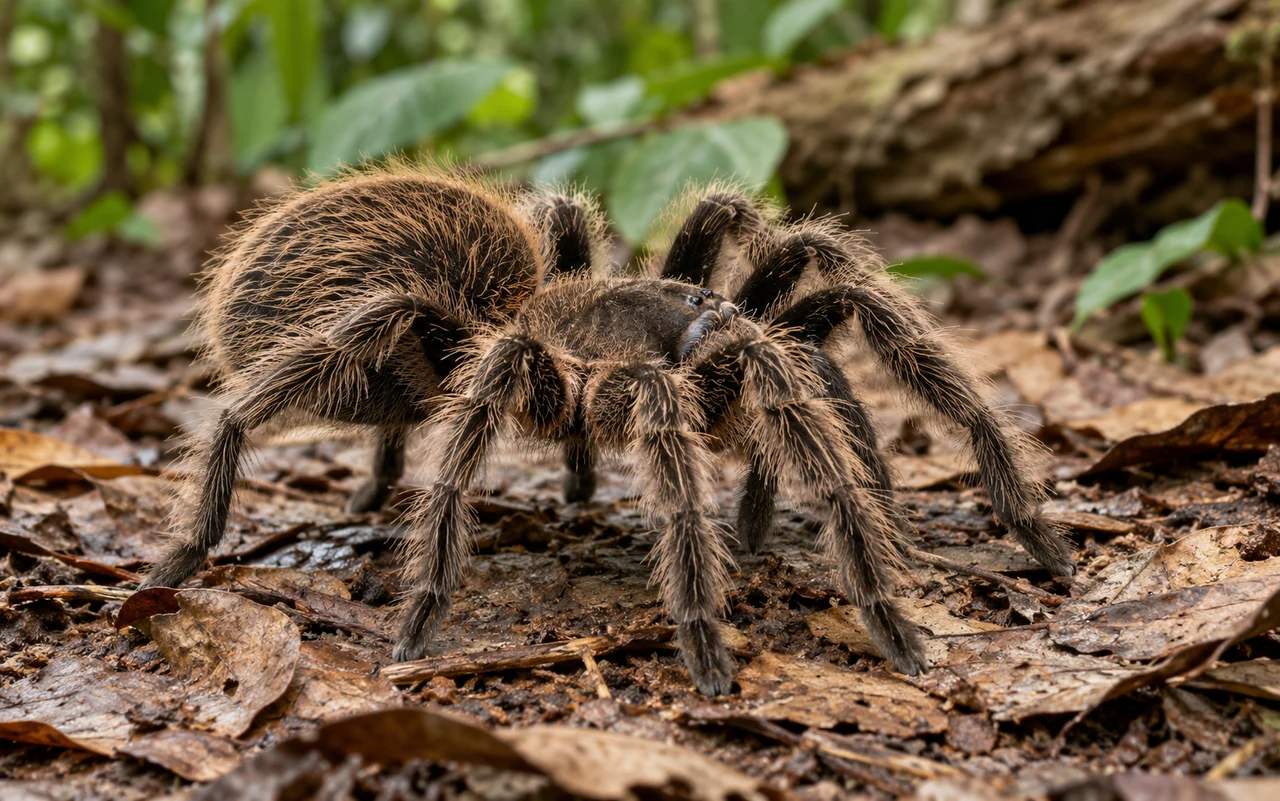
Meet the animal
Tliltocatl albopilosus is a Central American ground-dwelling tarantula, formerly placed in Brachypelma. Curled hairs and a locality trade name do not prove origin or a pure line. Keep the supplier’s identification and provenance records.
Before you choose one
Ask for stage, leg span, feeding history and sexing evidence. A female may need decades of care; a mature male has different remaining life and behaviour. Keep one spider for observation. A docile label cannot guarantee handling safety.
Set up its home
The proposed custom adult layout is 55 × 35 × 30 cm for a 15–17 cm leg-span planning case. Confirm the actual build and ventilation. Add substantial burrowing substrate and a stable hide, keeping free drop around one leg span or less. Use secure perforated ventilation without snag-prone exposed wire.
Temperature and safe heating
Firsthand keeper advice describes room conditions around 20–24°C. Check night minima and summer maxima. Suitable controlled room warmth is preferable to an unregulated mat beneath a burrow. Any additional heating must leave a cooler refuge.
Daylight, shade and UV
Use an ordinary day-night rhythm, shaded retreat and darkness overnight. The retrieved guidance does not establish mandatory UVB or a numeric exposure target. Observation lighting must not create a hot patch or brightly expose every refuge.
Water, moisture and airflow
Keep some deeper substrate modestly moist while the surface can dry, and provide a clean water dish. Spiderlings need closer hydration checks. Do not flood a burrow, chase one high humidity reading or replace drinking water with gel.
Food and nutrition
Offer suitable cultured insects. Keeper starting intervals are around 7–10 days for juveniles and often two or three weeks for adults, adjusted to abdomen condition and moults. Remove uneaten prey promptly and before moulting. Resume only once the new body and fangs have hardened.
Behaviour and handling
Expect burrowing, webbing and pre-moult fasting. Leave a closed retreat alone. A spider on its back may be moulting; never turn it over or peel old skin away. Avoid routine hand handling, falls and contact with irritating hairs.
Health and life stages
Persistent abnormal curled posture, injury, weakness or failed moulting needs experienced invertebrate-veterinary advice. Check water and climate, keeping meal and moult records. Do not use airtight wet recovery boxes, insecticides or forced manual moulting.
Buying and keeping records
Choose documented captive-bred stock with scientific name and stage records. Retain older genus names where used on paperwork. Confirm current trade and movement rules; locality labels are not origin certificates.
Your care routine
Prepare substrate, safe fall height and water access before arrival. Check water, controls and security regularly and remove food remains. Leave the last meal and moult state for holiday care, with clear instructions to preserve a closed retreat.
YOUR CHECKLIST
0 of 8 ticked
Curly hair tarantula — Tliltocatl albopilosus
Care hub: wildformexotics.co.uk/animals/curly-hair-tarantula/
Ticks are kept only while this page is open. Print or download a copy before leaving. Completing the checklist does not establish that an animal is well or an installation is safe.
Use these reminders alongside the full guide. Adjust feeding and maintenance to your animal’s condition and measured enclosure conditions.
Sources
- Curly hair tarantula firsthand husbandry (The Tarantula Collective, Richard Stewart)
- General tarantula care guide (The Spider Shop)
- UK species livestock listing (dated observation, not stock guarantee) (Repxotics)
- Guidance on section 14 of the Wildlife and Countryside Act (GOV.UK / Defra)
- Import of pet invertebrates, amphibians and reptiles: IIN (GOV.UK / APHA and Defra)
- Import or export endangered species: check if you need a CITES permit (GOV.UK / APHA and Defra)
Equipment checklist
Equipment examples for Curly hair tarantula, grouped by care need. Read the checks before choosing. Shop links are Amazon affiliate links. Items without a verified Amazon match have no shop link.
Plan the whole setup: These examples cover only part of the setup. Meet every care need and test the finished enclosure before arrival. Suitable equipment you already own may meet the need; optional tools are labelled.
Check each item for your animal’s size and life stage, safe access, compatible controls and measured conditions. The list does not certify an installation.
Adult enclosure, substrate and shelter
Read the care guidance for this need
Also plan for: Confirm the proposed 55 x 35 x 30 cm build and actual ventilation with the maker. Provide deep stable substrate, a fitted hide and low unprotected fall height; a custom service is not a ready enclosure. Add the substrate, hides, cover and secure supports described in the care guide. The enclosure alone does not provide them.
Temperature and safe heating
Read the care guidance for this need
Exo Terra Digital Thermometer
Model: PT2472
Records minimum and maximum air temperatures near a shelter your animal uses, to help you check the temperature plan.
Fit check: The remote probe measures air at one location. Keep it away from direct lamp heat, secure it safely and keep the display outside. Use separate probes for warm and cool areas where needed. Minimum/maximum readings help track changes; this device does not measure surfaces or control heating. Use a water-rated thermometer for submerged readings.
Lighting, shade and UV
Read the care guidance for this need
Existing lighting may already provide a suitable day-night cycle. If you need extra lighting, use a switch or timer confirmed as compatible with its exact load, including any UVB ballast.
Water, humidity and ventilation
Read the care guidance for this need
Exo Terra Water Dish Small
Model: PT2801
Provides accessible drinking water for a suitably sized established spider without forcing high enclosure humidity.
Fit check: PT2801 measures 5.5 × 6.5 × 3 cm externally. Check the usable basin, stability, safe water depth and easy entry and exit for your animal. Outside measurements do not establish a soaking fit. Clean and refresh water at least daily and whenever soiled. This is a small drinking dish, not an adult snake, dragon, frog or tortoise basin. Tiny spiderlings may need a smaller receptacle.
Exo Terra Digital Hygrometer
Model: PT2477
Optional air-humidity monitor
Tracks the air humidity cycle near an occupied area.
Fit check: Place the remote humidity sensor inside the enclosure, away from direct heat. The reading describes air at that point, so record its position and check other areas where needed. Inspect the substrate and damp retreats directly, and keep ventilation clear. A humidity reading cannot show whether an animal has drinking water.
Also plan for: Provide the drinking water, damp retreats or safe water area described in the care guide. A sprayer and humidity gauge cannot provide these on their own.
Feeding and nutrition
Read the care guidance for this need
Also plan for: Offer suitable cultured insects.
Equipment notes: Temperature and safe heating
EQUIPMENT TO CONSIDER
Exo Terra Digital Thermometer
Model PT2472 · Remote air probe and minimum/maximum memory; place away from direct lamp radiation. Check the supplier’s current price and availability, and confirm that the item suits your installation.
Records minimum and maximum air temperatures near a shelter your animal uses, to help you check the temperature plan.
Check before choosing: The remote probe measures air at one location. Keep it away from direct lamp heat, secure it safely and keep the display outside. Use separate probes for warm and cool areas where needed. Minimum/maximum readings help track changes; this device does not measure surfaces or control heating. Use a water-rated thermometer for submerged readings.
Equipment notes: Water, moisture and airflow
EQUIPMENT TO CONSIDER
Exo Terra Water Dish Small
Model PT2801 · Small drinker for appropriately sized animals; not a large soaking basin. Reduce water depth when needed. Check the supplier’s current price and availability, and confirm that the item suits your installation.
Provides accessible drinking water for a suitably sized established spider without forcing high enclosure humidity.
Check before choosing: PT2801 measures 5.5 × 6.5 × 3 cm externally. Check the usable basin, stability, safe water depth and easy entry and exit for your animal. Outside measurements do not establish a soaking fit. Clean and refresh water at least daily and whenever soiled. This is a small drinking dish, not an adult snake, dragon, frog or tortoise basin. Tiny spiderlings may need a smaller receptacle.
EQUIPMENT TO CONSIDER
Exo Terra Digital Hygrometer
Optional air-humidity monitor
Model PT2477 · Remote humidity probe; readings describe air at the probe, not substrate moisture. Check the supplier’s current price and availability, and confirm that the item suits your installation.
Tracks the air humidity cycle near an occupied area.
Check before choosing: Place the remote humidity sensor inside the enclosure, away from direct heat. The reading describes air at that point, so record its position and check other areas where needed. Inspect the substrate and damp retreats directly, and keep ventilation clear. A humidity reading cannot show whether an animal has drinking water.