Meet the animal
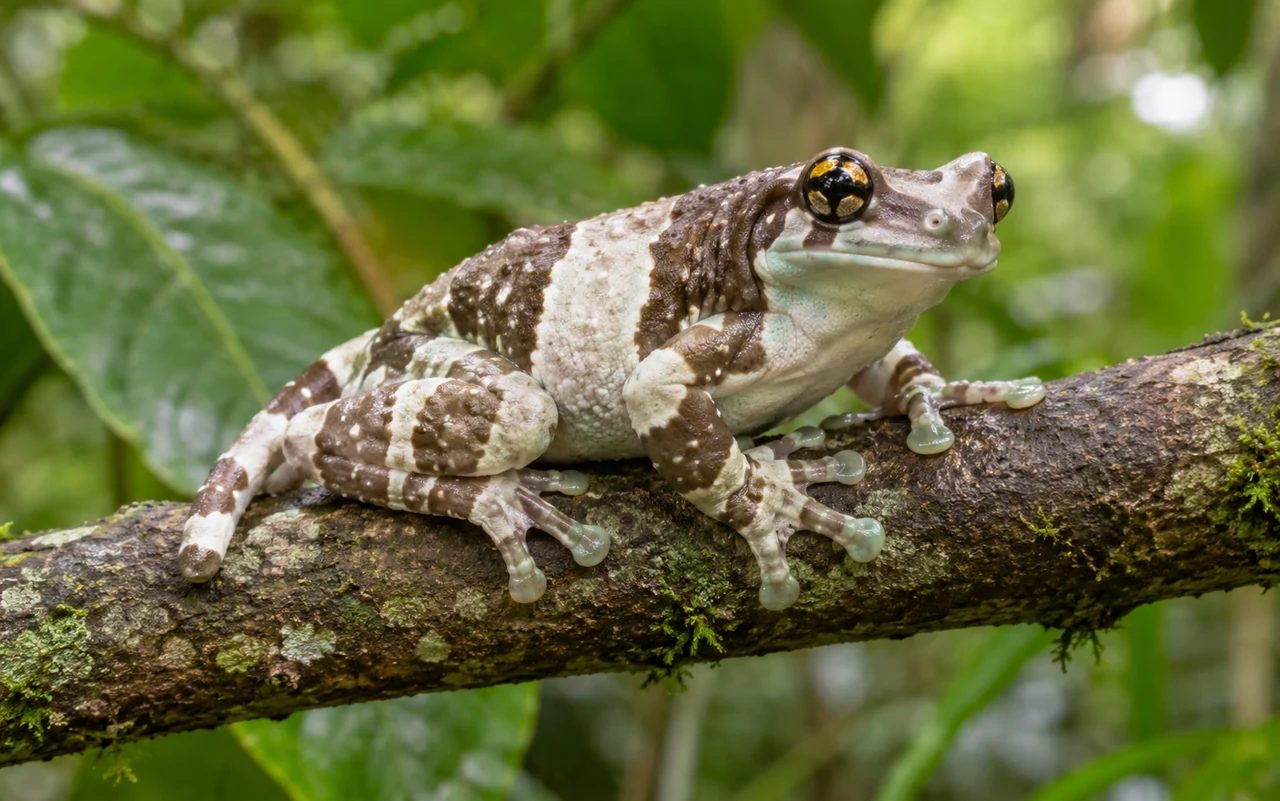
Trachycephalus resinifictrix is a South American tree frog with broad toe pads and contrasting markings that change as it matures. Similar milk-frog trade names do not independently establish identity. Ask for the scientific name.
Before you choose one
Plan tall housing, cultured insects, daily water care and an amphibian vet. The proposed pair requires size matching and monitoring rather than assuming compatibility. Have spare housing available and track each frog’s access to food.
Set up its home
The proposed small adult-group layout is 60 × 45 × 90 cm, with broad sturdy branches, foliage and several sheltered rests. Provide a stable accessible water basin and safe floor cover. Add space or separate animals if competition develops. Juveniles need finer gaps and easier food access.
Temperature and safe heating
UK guidance gives background air around 20–25°C, a warm perch around 25–28°C and nights around 20–23°C. Another keeper source is broader. Have age-specific conditions reviewed, control heat and measure air and perches separately. Keep hot fittings inaccessible.
Daylight, shade and UV
Provide about 12 hours of light and full darkness overnight. UK guidance supports low UV access, with exact exposure reviewed and measured at occupied perches. Older coloured night-light suggestions are not adopted. Maintain shaded resting sites.
Water, moisture and airflow
UK advice gives around 70–80% humidity, cycling with misting and drying while ventilation remains effective. Prepare suitable mineralised water treated for chlorine and chloramine. Clean the basin promptly. Pure distilled water is not the sole routine body-contact supply.
Food and nutrition
Offer varied small gut-loaded insects and a reviewed calcium and vitamin programme, including amphibian vitamin needs. Juveniles generally need frequent small meals; adults may need a few measured feeds weekly. Observe each frog eating, remove leftovers and avoid one fixed cricket count for every size.
Behaviour and handling
Observe climbing and nocturnal activity without frequent handling. Defensive skin secretion is a reason to avoid eye and mouth contact, not something to provoke. Use clean appropriately moistened gloves and a secure transfer method for essential moves.
Health and life stages
Red skin, swelling, abnormal movement, poor grip, wounds or persistent refusal need prompt amphibian-veterinary help. Record growth, intake and condition. Quarantine with separate equipment and avoid reptile medicines or cleaner residues on occupied furnishings.
Buying and keeping records
Choose documented captive-bred T. resinifictrix and retain feeding and origin records. Resolve conflicting trade names before transferring care to an animal. Confirm current movement requirements for an overseas purchase.
Your care routine
Test branches, shade, climate and water access before arrival. Each day, inspect frogs, water and controls. Remove waste and leftover prey and recheck branch strength after cleaning. Leave individual feeding and supplement instructions for holiday cover.
YOUR CHECKLIST
0 of 6 ticked
Amazon milk frog — Trachycephalus resinifictrix
Care hub: wildformexotics.co.uk/animals/amazon-milk-frog/
Ticks are kept only while this page is open. Print or download a copy before leaving. Completing the checklist does not establish that an animal is well or an installation is safe.
Use these reminders alongside the full guide. Adjust feeding and maintenance to your animal’s condition and measured enclosure conditions.
Sources
- Trachycephalus resinifictrix taxonomic record (American Museum of Natural History)
- Amazon milk frog care, 2021 (Monkfield Reptile)
- Amazon milk frog housing and care (Devin Edmonds, Reptiles Magazine)
- UV-Tool: selecting appropriate UV lighting for reptiles and amphibians (2016) (Baines and colleagues, Journal of Zoo and Aquarium Research)
- Environment and husbandry for amphibians (Merck Veterinary Manual)
- Introduction to amphibians: skin protection, handling and injuries (MSD Veterinary Manual)
- UK reptile species equipment list (Monkfield Reptile)
- CITES import and export guidance (APHA / GOV.UK)
- Guidance on section 14 of the Wildlife and Countryside Act (GOV.UK / Defra)
- Import of pet invertebrates, amphibians and reptiles: IIN (GOV.UK / APHA and Defra)
Equipment checklist
Equipment examples for Amazon milk frog, grouped by care need. Read the checks before choosing. Shop links are Amazon affiliate links. Items without a verified Amazon match have no shop link.
Plan the whole setup: These examples cover only part of the setup. Meet every care need and test the finished enclosure before arrival. Suitable equipment you already own may meet the need; optional tools are labelled.
Check each item for your animal’s size and life stage, safe access, compatible controls and measured conditions. The list does not certify an installation.
Adult enclosure, substrate and shelter
Read the care guidance for this need
Alternative equipment
Exo Terra Pro Paludarium 90 × 45 × 90 cm
PT4414; nominal external 90 × 45 × 90 cm; front-opening glass, closable bottom drain and lockable stainless-steel mesh top.
Secure doors, cables and vents; check the smallest life stage and actual usable space. External dimensions are not usable internal space. Check actual individual size, access, secure gaps, load support, furnishing clearance and any substrate depth before choosing this example.
Measure the finished usable floor and height after substrate and furnishings against this guide. Check doors, vents and cable gaps for the actual animal and life stage. Secure the lid, test airflow and temperature, and keep lamps inaccessible. For terrestrial layouts retain the land floor; close and secure any drain rather than adding a water pool.
Also plan for: Add the substrate, hides, cover and secure supports described in the care guide. The enclosure alone does not provide them.
Temperature and safe heating
Read the care guidance for this need
Exo Terra Digital Thermometer
Model: PT2472
Records minimum and maximum air temperatures near a shelter your animal uses, to help you check the temperature plan.
Fit check: The remote probe measures air at one location. Keep it away from direct lamp heat, secure it safely and keep the display outside. Use separate probes for warm and cool areas where needed. Minimum/maximum readings help track changes; this device does not measure surfaces or control heating. Use a water-rated thermometer for submerged readings.
Lighting, shade and UV
Read the care guidance for this need
Existing lighting may already provide a suitable day-night cycle. If you need extra lighting, use a switch or timer confirmed as compatible with its exact load, including any UVB ballast.
Solarmeter Model 6.5R UV Index Meter
Model: 6.5R
Use your own meter or arrange an exposure check
Measures UV Index at the animal’s reachable back height, with the screen and guards fitted.
Fit check: Use a 6.5 or 6.5R UV Index meter, rather than a UVB irradiance meter. Measure all reachable positions and shaded retreats through the fitted screen and guards. You can borrow a suitable meter or arrange a competent exposure check instead of buying one. Confirm UK supply if buying.
Also plan for: Agree a lighting and UV exposure plan for your animal before choosing a lamp. Keep a regular day-night cycle and accessible shade. No lamp model is selected here.
Water, humidity and ventilation
Read the care guidance for this need
Alternative equipment
Exo Terra Mini Mister — 0.5 L
PT2489; 0.5 L hand spray bottle. The Amazon title uses 16 US fluid ounces; this is not the conflicting 1.5/2 L pressure sprayer.
Adjust to the species: do not spray the animal directly, soak every surface or treat a mister as a substitute for drinking water. Use an existing suitable fine sprayer if you have one. Follow the individual wet-dry cycle; do not spray the animal, soak every surface or substitute misting for drinking water.
A manual misting tool only where the individual care plan calls for it. Use clean water, keep the bottle hygienic and free of chemicals, and do not spray directly at the animal. Check substrate/refuge moisture and drying/airflow rather than misting to a universal schedule.
Exo Terra Digital Hygrometer
Model: PT2477
Tracks the air humidity cycle near an occupied area.
Fit check: Place the remote humidity sensor inside the enclosure, away from direct heat. The reading describes air at that point, so record its position and check other areas where needed. Inspect the substrate and damp retreats directly, and keep ventilation clear. A humidity reading cannot show whether an animal has drinking water.
Seachem Prime 100 ml
Treats replacement mineralised water for chlorine and chloramine before appropriate use.
Fit check: Use only when new water needs chlorine or chloramine treatment. Prepare suitable replacement water in a separate container at the current label dose, and confirm the amphibian plan with a vet. Conditioner cannot replace cycling, water tests, changes or a safe basin. Do not use emergency overdoses or treat it as medicine.
Also plan for: Provide the drinking water, damp retreats or safe water area described in the care guide. A sprayer and humidity gauge cannot provide these on their own.
Feeding and nutrition
Read the care guidance for this need
Exo Terra Bamboo Tweezers Small 28 cm
Model: PT2076
Optional food-placement or maintenance tool
Places or removes food and spoiled leftovers while keeping fingers away from feeding responses.
Fit check: Use for placing food or removing leftovers, never for gripping the animal, forcing a bite or striking its mouth. Keep tools separate between quarantine groups. Choose food and supplements separately for the species.
Also plan for: Offer varied small gut-loaded insects and a reviewed calcium and vitamin programme, including amphibian vitamin needs.
Equipment notes: Set up its home
Alternative equipment
Exo Terra Pro Paludarium 90 × 45 × 90 cm
PT4414; nominal external 90 × 45 × 90 cm; front-opening glass, closable bottom drain and lockable stainless-steel mesh top.
Secure doors, cables and vents; check the smallest life stage and actual usable space. External dimensions are not usable internal space. Check actual individual size, access, secure gaps, load support, furnishing clearance and any substrate depth before choosing this example.
Measure the finished usable floor and height after substrate and furnishings against this guide. Check doors, vents and cable gaps for the actual animal and life stage. Secure the lid, test airflow and temperature, and keep lamps inaccessible. For terrestrial layouts retain the land floor; close and secure any drain rather than adding a water pool.
Equipment notes: Temperature and safe heating
EQUIPMENT TO CONSIDER
Exo Terra Digital Thermometer
Model PT2472 · Remote air probe and minimum/maximum memory; place away from direct lamp radiation. Check the supplier’s current price and availability, and confirm that the item suits your installation.
Records minimum and maximum air temperatures near a shelter your animal uses, to help you check the temperature plan.
Check before choosing: The remote probe measures air at one location. Keep it away from direct lamp heat, secure it safely and keep the display outside. Use separate probes for warm and cool areas where needed. Minimum/maximum readings help track changes; this device does not measure surfaces or control heating. Use a water-rated thermometer for submerged readings.
Equipment notes: Daylight, shade and UV
EQUIPMENT TO CONSIDER
Solarmeter Model 6.5R UV Index Meter
Use your own meter or arrange an exposure check
Model 6.5R · UV Index meter; take readings at accessible back height with screen and guards installed. Check the supplier’s current price and availability, and confirm that the item suits your installation.
Measures UV Index at the animal’s reachable back height, with the screen and guards fitted.
Check before choosing: Use a 6.5 or 6.5R UV Index meter, rather than a UVB irradiance meter. Measure all reachable positions and shaded retreats through the fitted screen and guards. You can borrow a suitable meter or arrange a competent exposure check instead of buying one. Confirm UK supply if buying.
Equipment notes: Water, moisture and airflow
Alternative equipment
Exo Terra Mini Mister — 0.5 L
PT2489; 0.5 L hand spray bottle. The Amazon title uses 16 US fluid ounces; this is not the conflicting 1.5/2 L pressure sprayer.
Adjust to the species: do not spray the animal directly, soak every surface or treat a mister as a substitute for drinking water. Use an existing suitable fine sprayer if you have one. Follow the individual wet-dry cycle; do not spray the animal, soak every surface or substitute misting for drinking water.
A manual misting tool only where the individual care plan calls for it. Use clean water, keep the bottle hygienic and free of chemicals, and do not spray directly at the animal. Check substrate/refuge moisture and drying/airflow rather than misting to a universal schedule.
EQUIPMENT TO CONSIDER
Exo Terra Digital Hygrometer
Model PT2477 · Remote humidity probe; readings describe air at the probe, not substrate moisture. Check the supplier’s current price and availability, and confirm that the item suits your installation.
Tracks the air humidity cycle near an occupied area.
Check before choosing: Place the remote humidity sensor inside the enclosure, away from direct heat. The reading describes air at that point, so record its position and check other areas where needed. Inspect the substrate and damp retreats directly, and keep ventilation clear. A humidity reading cannot show whether an animal has drinking water.
EQUIPMENT TO CONSIDER
Seachem Prime 100 ml
Aquarium conditioner that treats chlorine/chloramine; use label dose in a separate container, never a replacement for water-quality testing. Check the supplier’s current price and availability, and confirm that the item suits your installation.
Treats replacement mineralised water for chlorine and chloramine before appropriate use.
Check before choosing: Use only when new water needs chlorine or chloramine treatment. Prepare suitable replacement water in a separate container at the current label dose, and confirm the amphibian plan with a vet. Conditioner cannot replace cycling, water tests, changes or a safe basin. Do not use emergency overdoses or treat it as medicine.
Equipment notes: Food and nutrition
EQUIPMENT TO CONSIDER
Exo Terra Bamboo Tweezers Small 28 cm
Optional food-placement or maintenance tool
Model PT2076 · For placing/removing food, not gripping animals; separate tools between quarantine groups. Check the supplier’s current price and availability, and confirm that the item suits your installation.
Places or removes food and spoiled leftovers while keeping fingers away from feeding responses.
Check before choosing: Use for placing food or removing leftovers, never for gripping the animal, forcing a bite or striking its mouth. Keep tools separate between quarantine groups. Choose food and supplements separately for the species.